



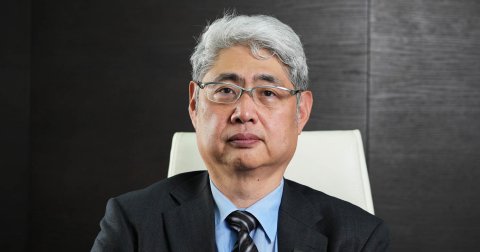
From supporting oil & gas and hydrogen infrastructure to scaling renewable-ready pipe solutions, CEO Noritsugu Mifune outlines AGPC’s vision for innovation, sustainability, and global competitiveness.
The global energy landscape is undergoing a rapid transformation, and few industries sit at the intersection of this shift as critically as steel pipe manufacturing. Whether supporting traditional oil and gas operations or enabling fast-growing renewable energy projects—from hydrogen transport and carbon capture to wind and solar infrastructure—the sector is redefining its role in a diversified energy future.
Al Gharbia Pipe Company (AGPC), led by CEO Noritsugu Mifune, has emerged as a regional benchmark for digitalised manufacturing, advanced testing capabilities, and sustainability-driven operations. Guided by Industry 4.0 systems, AI-enhanced quality assurance, and strategic partnerships with ADQ, JFE Steel, and Marubeni Itochu, AGPC is scaling production while maintaining precision, safety, and efficiency across its entire value chain. With the UAE accelerating its industrial transformation agenda, AGPC’s technological leadership and commitment to local talent development place it at the forefront of next-generation LSAW pipe manufacturing.
The following interview with Tahawultech.com explores how AGPC is navigating the energy transition, strengthening global competitiveness, and shaping its five-year roadmap for innovation and sustainable growth.
Interview excerpts:
How is the steel pipe industry adapting to support both oil & gas and renewable energy projects amid the global energy transition?
Steel pipes are indispensable in both conventional and emerging energy infrastructures. These pipes are used to carry not just oil and gas, but also serve renewable energy operations such as hydrogen transport, wind turbine towers, solar panel mounting systems, and geothermal wells. This wide range of applications requires the ability to manufacture products that meet many different steel pipe standards. Al Gharbia Pipe Company uses carbon steel from Grade B up to X80, with sour service line pipe making up around 80% of our output. Sour service pipes are designed for use in environments containing hydrogen sulfide (H₂S), a highly corrosive and toxic gas. These environments are often present in oil and gas, hydrogen, and carbon capture and storage operations. We produce steel pipes across a wide range of diameters, thicknesses, and lengths, and we are certified to ISO 17025, API, and international standards.
How is AGPC using AI and Industry 4.0 technologies to ensure top-quality, precision-engineered steel pipes?
All of our plant processes at AGPC are seamlessly connected through our advanced Smart Manufacturing Execution System (MES) 4.0. This system allows us to execute, monitor, track, and report operations on the plant floor in real time. Acting as the brain of our operations, MES integrates manufacturing and testing processes while dynamically adjusting production plans and schedules based on actual shop floor conditions. We also take pride in our ISO/IEC 17025-certified testing laboratory, which ensures that every pipe we produce meets rigorous quality standards throughout every stage of the manufacturing process. Through machine learning, our systems continuously learn and improve, ensuring that every pipe meets the highest standards of safety and durability.
“We were recently awarded the Industry 4.0 Digital Leader certification by the UAE’s Ministry of Industry and Advanced Technology (MoIAT), reinforcing our position at the forefront of LSAW pipe manufacturing technology in the Middle East.”
How is AGPC improving sustainability and efficiency across its operations?
Our fully integrated production process, which covers execution, utilities, sourcing, and sales, greatly increases the efficiency of our operations by minimising waste and optimising each stage of manufacturing. Additionally, we are committed to sustainability, and our initiatives to conserve energy, reduce carbon emissions and reuse water have been recognized as a key part of our operational excellence.
How do your partnerships with ADQ, JFE Steel, and Marubeni Itochu strengthen AGPC’s global competitiveness?
Our three shareholders deliver a unique synergy that enables us to produce up to 360,000 tons per year, or an equivalent of 760 kilometres of pipeline. Our majority shareholder is Senaat, which is part of ADQ, one of the UAE’s largest industrial investment holding companies, with holdings across multiple industries, both domestically and internationally. JFE Steel is the second-largest steel manufacturer in Japan, with an annual output of approximately 23 million tons of steel. Through our close association with JFE Steel Pipe Fukuyama, we have access to more than 50 years of pipe manufacturing experience. Marubeni Itochu Steel Inc. (MISI) is a Japanese provider of commercial and logistical support to some of the world’s largest oil and gas companies. We benefit from MISI’s global trading network and supply chain management expertise, allowing us to ensure the accurate and timely delivery of pipe orders.
With over 40 years in steel, what’s your vision for AGPC’s growth and innovation over the next five years?
My vision for AGPC over the next five years is rooted in innovation, sustainability, and strategic growth. We aim to solidify our position as a regional leader in LSAW pipe manufacturing by expanding our capabilities to serve both traditional oil & gas markets and emerging renewable energy sectors. Digital transformation will continue to be a cornerstone of our strategy. Our Smart MES 4.0 gives us real-time visibility and control across operations, and we plan to build on this foundation by enhancing AI-driven analytics and predictive maintenance capabilities, allowing us to further enhance efficiency and product quality. On the sustainability front, we’re committed to reducing our environmental footprint through greenhouse gas emissions reduction and water reuse initiatives, which is very important in desert climates. We also see tremendous opportunity in supporting hydrogen infrastructure CO2 transportation, where our expertise in sour service pipe manufacturing gives us a competitive edge. Finally, we will continue investing in talent, technology, and partnerships to ensure AGPC remains agile, resilient, and future-ready. We especially support the development of local talent, allowing aspiring Emiratis to realise their full potential. Our goal is not just to grow, but to lead the transformation of the steel pipe industry in the region.
What does the Impact Champions award at ADIPEC mean to you and AGPC?
Through our participation in ADIPEC, we showcased our focus on Industry 4.0, which is an integral part of our organisation’s DNA. We created an interactive experience, including an AI-powered digital human assistant that uses large language models to understand queries and generate human-like responses. By highlighting innovation, strategic messaging and visual curation through our stand design, we became one of only 19 out of over 2,500 exhibitors to receive the Impact Champions recognition. I salute every member of our organisation for making this achievement possible through their innovation, dedication, and teamwork.