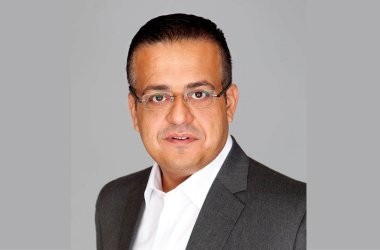



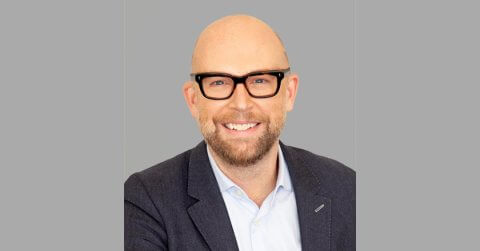
In the midst of Intersec 2026, Daniel Shepherd, Editor for CPI Media Group, sat down with Andrew Elvish, Vice President of Marketing at Genetec Inc., to discuss the company’s strategic focus for the region. Andrew has over 14 years of experience with the company and has been witness to a lot of the changes within the Middle Eastern region over the years.
For years, CISOs were trying to make the topic of security a major priority at the boardroom level, but budgetary constraints always hampered their ability to do their job effectively, and there was a blissful ignorance towards security. Fast-forward to now, and there has been a complete shift when it comes to security. Can you provide us with your perspective on that shift, and how security has now become paramount for all organisations regardless of their industry?
For a very long time, physical security was seen as a cost of doing business. It was regarded much as one would think of plumbing, air conditioning or fire suppression, just another overhead. That impression lasted for a very long time, and I think it put physical security professionals in rather a poor light. They were often cut or optimised to a point, but since the rise of IP based video surveillance in the early 2000s, slowly we’ve started to see video surveillance, access control, license plate recognition and alarms gain traction. People started understanding that there was more to this data than just a contingency in case something went wrong. This data revealed patterns about the business and how they operate in a physical space.
For example: How can airports make queues better? How can they keep people moving through the airport seamlessly? Having control of gates, access, and the ability to automatically create workflows to open up new security lines. All these elements will help move people more seamlessly and lead to a happier customer. As we all know with airports, happy customers will go to duty free and spend more money.
Corporations run massive operations around the world. Think about oil, gas or large media companies. They have operations everywhere, and sometimes they need to be able to stand up operations quickly or take them down. They’re looking to suppliers of physical security and access control like Genetec to be able to design systems that are highly resilient, quick to deploy, and attached to what’s going on with their employees. Think about the badge you wear to work to open doors. Some companies use logical and physical access control to say it’s odd this particular employee is logging into his office workstation, but he hasn’t badged into the office. We should block his access to his computer. That’s an example of logical and physical access control working together.
We’re integrating HR systems into our Security Centre platform and using data visualisation tools like Power BI to gain clearer insight into how organisations operate. We get requests from physical security professionals to push physical security into their data lakes or the data warehouses within their companies.
This is a total mindset shift from the days of CCTV, pulling coaxial cable and having a matrix to switch camera views. This has been a huge change happening gradually over the last 20 years and it has only accelerated since the pandemic. We do a security report every year called the State of the Physical Security Industry and what we saw last year is that IT and physical security are blending together. They now represent an almost indistinguishable group of very talented people who know about physical, IT and cyber security. What we do at Genetec is seen as a strategic function and investment for most businesses.
Can you outline in detail how the demand for physical security has evolved across the Middle East, and what factors are primarily driving that growth?
The Middle East is a great market to talk about demand. I would say ambition is the key word when you think about this market. There are very ambitious governments here that want to change up their perception on the world stage. They want to be hubs of business and tourism. They want to increase their tourism levels and attract workforce talent.
They want to bring people into these spaces, and they want to do that by answering questions such as how can we design the best communities? How can we design the best cities? How can we have the best industrial base? In this region, we’ve seen investments in large-scale data centres such as airport retrofits, smart cities and projects like NEOM on the Red Sea. These are massive, geological scale projects, in addition to the obvious ones like natural resources. There’s a big push towards bringing hyperscale data centres in and that is what really underpins this market. They’re building for depth and longevity.
They are implementing unified security platforms at a higher rate than the rest of the world. We see the demand for unified security, which is basically one platform that consolidates video surveillance, access control, ALPR, intercom and alarms. They choose from the best and they’re designing for the future. That’s what’s been driving a lot of the growth here, and you can see it on the show floor here at Intersec.

What areas are Genetec positioning its strategic focus in the region, and what business priorities are shaping your current roadmap?
Over the last eight months, we have seen a sudden change in the attitude towards the cloud, especially in places like Qatar and the United Arab Emirates. Whereas before there were real concerns about data sovereignty, data residency and which kind of data centres were available in the region. Now we’re starting to see investment in data centres happening.
The Middle Eastern end users are starting to ask for the benefits of the cloud, such as rapid updates, ease of system management and ease of access to the security data, but they want this without having to send any video files or access control to the cloud. This isn’t a unique desire as there are many companies globally who don’t want their data to exist on the cloud, they just want to see it on-site for various reasons such as added hassle or expense.
What we are highlighting at this show is Cloudlink 210 and the whole range of Cloudlink appliance products. These are appliances that sit on premises with the customer and act as a bridge to the cloud. Now these bridges can just be used for redundancy purposes, but they can also be used as the place where all of your data resides, and the cloud just feeds into it. It acts as a more of a one-way discussion rather than pushing all your data into the cloud.

Can you explain the role AI and intelligent automation now play in physical security deployments, and how is Genetec leveraging these technologies? In addition to this question, many security practitioners view AI as a double-edged sword – what are the building blocks enterprises need to establish to ensure they are deploying AI both ethically and responsibly?
I think the number one thing that any security end user should do when they hear about AI is to be sceptical. I would wager that many of AI innovations that you hear about, not just in our industry, but broadly, exist only in press releases. Genetec takes a pragmatic view because we know, when we’re talking to large scale energy or tech companies, they want practical innovation that helps them achieve their outcomes. My advice to your readers would be to really think about the outcome you’re trying to achieve. Artificial Intelligence is a tool, a means to an end, so what end are you trying to achieve? At Genetec, we spend a lot of time thinking about the ends that should matter to security professionals.
Here’s one example that we’re showing on the show floor here at Intersec and that’s investigations. Traditional investigations in the physical security space are complex, intricate and time consuming. When you’re trying to investigate something across access control, video surveillance, intercoms and ALPR, you’re trying to put together into a storyboard for an investigator which could take 12-15 hours to assemble from your systems. So that’s something AI would be good at, because computers are great at doing tasks where they just kind of sift through vast amounts of data. Using this we’ve cut complex investigations that could have taken 12 hours down to 15 minutes.
We can ask questions like, “when did an object appear in the frame” and “when did it leave the frame”, and have the answer automatically by just pointing to the object and saying, “show me when it came in”, and “show me when it left”. Once you find the person who took the object, you can say, “now tell me where you’ve seen that person across all the cameras in this estate”. Once we determine the intruder we can take this footage, bundle it up, and submit it as evidence.
Now the AI isn’t making any conclusions, and this is what Intelligent Automation is all about, humans should be the ones to draw conclusions. AI can give you a hypothesis and a security operator could utilise it to help resolve an incident. This is true innovation that drives results and outcomes.
Another example is that we know security professionals are having trouble hiring security operators. It’s a very tough job market. There’s not a lot of people out there, so you have to try and find people who are good but maybe they don’t speak the language that you want them to speak. You can overcome this through a large language model. You could do it in any language you want, even with slang, and the system will understand it. It allows you to broaden your ability to bring new people into any role.

How are Middle Eastern customers adopting cloud and hybrid models, and what opportunities do you see emerging from smart-city initiatives?
Hybrid has started to become a more viable option for security professionals operating in this market. They’re starting to see that they can design a hybrid system where the majority of the data stays local but can still be accessed from the cloud. I think in the Middle East, we’re getting the mindset that customers want a seamless, frictionless experience with their models and this can be achieved with a hybrid deployment.
In the smart city space these opportunities allow the customers access to a wealth of new tools. New types of analytic algorithms can be deployed across their cameras, new types of investigations could be achieved, and it could allow them to measure the usage of municipal installations like public parks. There’s a desire to have a very modern, IoT friendly network, which comes to life when you’re able to design it in a hybrid fashion. I think more people will get used to leveraging hybrid systems, or even full cloud systems once Amazon, Google and Microsoft start opening full data centres in the region.
What verticals or customer segments represent the strongest growth opportunities for Genetec in the Middle East over the next few years – and what Genetec products are gaining the most traction in the region?
The verticals are indicative of large-scale infrastructure spending. We’ve seen a lot of investment in airport modernisation and building as these projects are hungry for unified network systems. Natural resource operations are typically highly distributed and lead into our perspective on a hub and spoke system. Your hub is on-premises, but all of your spokes, such as oil fields, are further away from the hub. The hybrid cloud resonates with these projects as a means to have the cloud directly based in the hub. When you look at smart city deployments, they want to provide a sense of safety. So Genetec’s tagline is to protect the everyday, because we believe if your day is a bit boring, it’s a good day. We see developments wanting to implement subtle, smart and well positioned security systems so that the citizens don’t feel like they’re being surveyed by an overbearing presence.

At Genetec we’re an open platform, and that’s the reason why we tend to be the platform of choice for these large-scale projects, because we can attach so many different sensors into our system. All major camera manufacturers provide access control, but we can focus on sensors, such as vaping and private area sensors. At our booth at Intersec we’re showing a near-field radar, which can detect a human presence but doesn’t use a camera, making it ideal for areas where you expect privacy such as changing rooms. Genetec follows privacy by design principles that resonate with a lot of customers.
We also have a very robust privacy protection system built onto our platform. If you want it, you could have fully blurred cameras so that you can basically see people, but they’re pixelated people. There are no specifics, just an understanding that there are two humans sitting in view of a camera. If a theft is reported, the police or the security team could unblur the footage and use it to determine if the act was recorded. This technology functions by recording two streams of footage, one of which is archived at a high resolution and the other that is pixelated for the monitors to keep an eye on. In certain jurisdictions you would require the approval of four separate people to unblur the footage to avoid instances of collusion or unreasonable unblurring of footage. We see this technology used a lot in spaces with high-net-worth individuals such as at fancy restaurants. In these environments you don’t want a security operator using their phone to record, for example, a movie star having an altercation, because these operators could potentially share the recordings with the media. This has been known to happen, and so our system protects against that scenario.
Image Credit: Genetec