



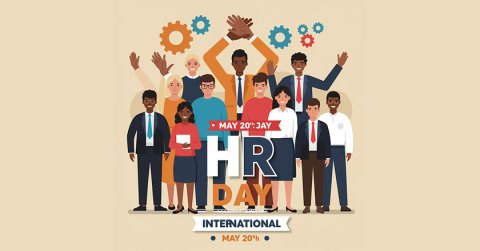
 Marked on 20 May under the theme ‘Empower People to Lead Change’, International HR Day 2026 highlights the growing role of HR in building trust-driven leadership, human-centric AI adoption and continuous learning cultures.
International HR Day, observed on 20 May, is being marked in 2026 under the theme ‘Empower People to Lead Change’, with a focus on future-focused leadership, human-centric AI and continuous learning. The official 2026 theme highlights how rapidly changing workplaces require trust-driven leadership, responsible AI adoption and inclusive upskilling systems.
Across the MENA region, HR leaders are being called upon to do more than manage people processes. The mandate now includes anticipating talent needs, building agile workforce models and enabling people to lead through uncertainty.
Mahesh Shahdadpuri, CEO and Group Chairman, TASC Outsourcing, said workforce decisions are becoming increasingly data-driven. “Businesses today have greater visibility into skill availability, workforce productivity, and evolving employee expectations, enabling faster and more informed decision-making,” he said. Digital tools are helping organisations identify retention risks earlier and deploy talent more effectively. “Organisations that can make agile, informed talent decisions are better positioned to adapt, grow, and maintain a competitive edge.”
Recruitment is also being reshaped by automation and AI. “At TASC, we are investing in intelligent workforce solutions that combine technology, market insight, and human expertise to support faster, more effective hiring decisions,” Shahdadpuri said, adding that human judgement remains essential in assessing adaptability and long-term fit.

Mohammed Alkhotani, Middle East General Manager and Senior Vice President at Salesforce, said the AI conversation needs to move beyond productivity. “AI has the ability to create significant capacity within organisations, helping teams move faster, operate at greater scale, and rethink how work gets done. But the real value is not simply in efficiency, it is in what organisations choose to do with that capacity.”
The most forward-thinking organisations, he said, will use AI to free people for higher-value work that requires judgment, creativity and relationship-building. “That is where AI moves from being a technology conversation to becoming a leadership conversation. And this is where HR has a critical role to play.”
Alkhotani noted that the World Economic Forum projects 39 per cent of existing skill sets will be transformed or outdated by 2030, making reskilling, AI fluency and data literacy business priorities today. “Across our region, from the UAE to Saudi Arabia, we are already seeing national agendas place workforce readiness, digital capability, and human potential at the centre of economic transformation.”
He added that organisations investing in reskilling and redeploying talent will build a more agile, capable workforce. “On International HR Day, it is a timely reminder that technology transformation and workforce transformation must go hand in hand. The future of work will not be defined by AI alone, but by leaders who use it to unlock human potential.”
The International HR Day 2026’s emphasis on human-centric AI and digital transformation, which places HR at the centre of setting guidelines, ensuring oversight and supporting inclusive upskilling.
Lauren Davey, Chief People Officer, myZoi, said technology has fundamentally redefined HR. “Technology has freed it from transactional work and elevated it into a strategic, insight-led function that shapes business outcomes through data, workforce intelligence, and human understanding.” She added: “Data allows us to ensure the right people are doing the right things at the right time, leaving the days of HR administration firmly in the past.”
Richard Lobo, Chief People Officer, Tech Mahindra, said HR’s future role will be linked to building confidence, adaptability and continuous learning. “Our future needs are for ‘connectors’ — people who link human insights with technology and create meaningful impact through that intersection.”
Technology alone cannot drive transformation, Lobo added. “Creating a culture of continuous learning, adaptability, and confidence becomes critical. Employees are far more willing to lead through uncertainty when they feel trusted, empowered, and equipped with opportunities to grow beyond their immediate roles.” When leaders share context transparently and connect change to purpose, he said, “people see disruption as an opportunity and grow with the organisation.”
International HR Day 2026 reflects a broader reality: HR is no longer a back-office function. It is a strategic engine for workforce readiness, digital transformation and human-centred growth.
The future of HR will not be defined by technology alone, but by how effectively organisations combine data with empathy, automation with accountability, and digital tools with human judgement.

Senior HR and business leaders across the region and beyond are reflecting on how their roles, strategies and priorities are evolving. From workforce agility and AI adoption to continuous learning and human-centred leadership, their perspectives offer a clear view of how organisations are rethinking the future of work.
Mahesh Shahdadpuri, CEO and Group Chairman, TASC Outsourcing
World HR Day highlights how significantly the role of HR has evolved. Today, HR plays a central role in shaping business growth, resilience, and workforce readiness in an environment defined by constant change. At TASC, we believe future-ready organisations are built through agility. The ability to quickly access skills, adapt workforce models, and respond confidently to market shifts has become a key competitive advantage. HR leaders are increasingly expected to align talent strategy with business priorities, ensuring organisations have the right capabilities to grow, adapt, and lead in a rapidly evolving market.

Sonam Haider, Founder and Global Mobility Strategist, Aethra Advisory
Everyone is asking how to use AI in hiring. The real question organisations should ask is what they are trying to build. AI can accelerate recruitment, enhance candidate experience, and surface workforce insights at unprecedented speed. But speed without direction only accelerates misalignment, and in workforce planning that becomes a costly risk. Having worked with fast-scaling organisations for over a decade, I have seen that challenges rarely stem from slow execution but from unclear strategy. AI does not resolve that gap. It amplifies it. At Aethra, we use AI as a thinking partner in workforce architecture, stress-testing expansion strategies, mapping compliance risk, and helping founders ask better questions earlier. Organisations that succeed will not be those with the most advanced tools, but those with the clearest strategic intent and the discipline to ensure technology serves it.
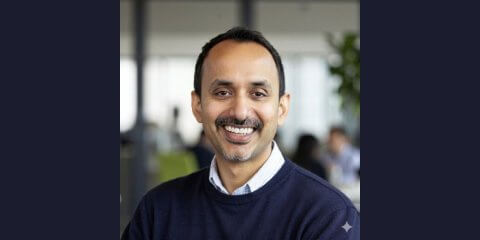
Avinav Nigam, Founder and CEO, TERN Group
AI does not make recruitment more human. People do. When used responsibly, AI can give those people the time and space to actually show up. Use it to remove the paperwork, the manual screening, and the administrative weight that stops your HR teams from doing the work that matters. But never use it to replace the judgment call, the empathy, or the conversation that changes someone’s life. The organisations that will get this right are the ones that treat AI as infrastructure, not as a shortcut. Build it with transparency, audit it constantly, and always keep a human accountable for the outcome.

Lauren Davey, Chief People Officer, myZoi
On World HR Day, the call to organisations is clear: embrace AI and digital tools not as replacements for human judgment, but as amplifiers of it. Use them responsibly, transparently, and ethically to remove bias, enhance fairness, and design truly human-centered experiences in recruitment, workforce planning, and employee engagement. The future of HR is not just digital, it is deeply human, with technology serving as a catalyst, not a substitute, for empathy, trust, and purpose-driven leadership. In a technology-driven world, our humanity is what sets us apart; the ability to amplify both technology and humanity in tandem will allow organisations to win.

Richard Lobo, Chief People Officer, Tech Mahindra
Disruption today is no longer episodic; it is constant, fundamentally changing how organisations prepare their people for the future. One of our largest focus areas has therefore been on fostering knowledge and continuous learning, especially given the rapid changes across the technology landscape. We encourage people to move between technologies and verticals, with a strong focus on developing future leadership from within the organisation. I believe leadership today cannot remain confined to familiar domains or fixed functional expertise. We have encouraged leaders to step into unfamiliar roles and experiences, while strengthening succession planning through rotations and leadership development programs. In many ways, the future belongs to interdisciplinary competence, where individuals can combine technological understanding with human insight.
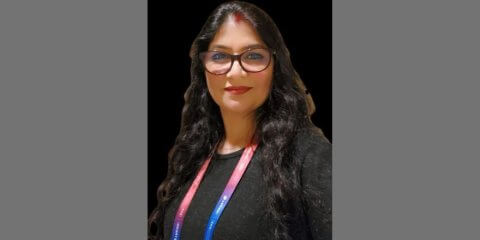
Jaya Khatri, HR Director, MMEA, Trend AI
Technology is fundamentally redefining the role of HR, shifting it from a function focused on processes and paperwork to one that is deeply strategic, data-informed, and people-first. At TrendAI, this shift is already underway, with AI-powered hiring, intelligent workforce planning, and digital employee experience platforms increasingly becoming operational realities that drive meaningful business outcomes.
On World HR Day, my message to organizations is simple: embrace these tools thoughtfully. Human-AI collaboration works best when technology amplifies human judgment rather than replaces it. Transformation in HR must be guided by ethics, transparency, and a genuine commitment to people because no matter how advanced the tools become, the purpose they serve remains deeply human