



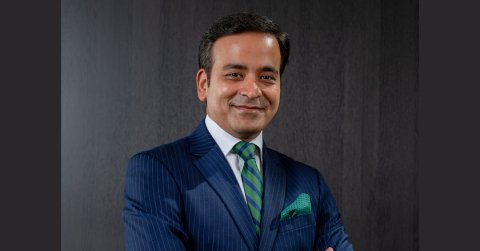
Vinay Surana, Regional Managing Director, Asia Pacific, Middle East & Africa at Allianz Partners the impact artificial intelligence is having on both emboldening cyber criminals and empowering cyber security companies.
With the revolution in artificial intelligence (AI) well underway, the world of cyber security is rapidly transforming, bringing with it both new threats, as well as powerful tools for prevention. On the one hand, AI is emboldening cyber criminals, making cyberattacks and digital fraud more frequent and sophisticated, and increasingly difficult for consumers to detect. On the other hand, leading cyber security companies and insurance companies are harnessing AI to protect consumers and business alike. Have you ever imagined how AI is shaping both sides of the cyber conflict?
The escalation of cyber threats
From phishing to ransomware to identity threats, all such activities were escalating every day with digitization, but they weren’t enough. Today, hackers are launching new hacker attacks every 39 seconds[1], that means more than 2,200 cyber-attacks take place every single day. Someone out there is deceived, impersonated and is stolen in the most sophisticated way ever and AI, which is learning and upskilling itself from the data we feed every second, is the engine behind this new era.
Deepfake technology, for example, enables scammers to create highly realistic audio and video content to impersonate people. The F-Secure Cyber Threats Guide reported that a finance worker at a multinational firm was tricked into transferring $25 million after fraudsters used deepfake technology to impersonate the company’s CFO during a video conference[2].
While perhaps extreme, this example underscores the complexity of cyber security threats, making it difficult for individuals to spot a scam. And a growing number of people are falling victim. According to the Global Anti-Scam Alliance, nearly $1.026 trillion was lost by consumers worldwide last year, with deep fakes and SMS, shopping, banking, and social media scams ranking in the top five top cyber security threats. As AI also makes deep fake scams more scalable, predictions are that they will become more widespread[3].
For businesses, the danger is equally pronounced. The recent Allianz Risk Barometer ranked cyber incidence as the top risk businesses expect to face in 2025. For those of us in the Middle East, the danger is more acute. The average cost of data breach for businesses reached $8.75 million USD sin 2024[4] in the region. This is nearly double the global average, with the region ranking as the second highest globally for data breach attacks. Although some attacks use automated methods, most data breaches exploit the vulnerable links: human beings. With the power of AI, look-alike visuals make it impossible for people to distinguish a legitimate request or platform from a malicious one. The question is no longer whether we will face a threat, but how will we respond when it inevitably strikes. Industry leaders must play a pivotal role in preventing cyber threats and extending services that include education on how and when to act.
Our Counter-Offensive with AI
Fortunately, AI is not just a tool for attackers, it’s proving equally powerful in defence. While AI is being leveraged by hackers to illegally scam more and more people, cyber security companies like F-Secure are using AI for good. In 2024, the company launched its scam protection functionality, which works contextually, and in real-time. Covering online shopping, banking, SMS scams, phishing links, harmful ads, and more, F-secure runs 700,000 AI-driven detections each day to block suspicious behaviour, securing over 1 million banking transactions worldwide.
Insurance products are now making similar software available to businesses and consumers to help prevent and protect them against harmful online threats. In fact, more than two-thirds of businesses are now using AI for cyber security, which can help to spot and stop cyber-attacks faster than ever before.[5] That includes insurance companies themselves, as many are turning to AI to monitor and predict real-time cyber threats, detect fraudulent claims with over 40% greater accuracy[6], and automate decisions. This isn’t just about protecting systems; it’s about building a resilient, intelligent defence ecosystem that learns and acts faster than the threats for prevention.
Staying ahead of cyber criminals
Implementing strong security infrastructure, including AI-powered security measures and insurance coverage, is no longer optional, it’s a fundamental necessity. To truly secure our future, governments, businesses and individuals must recognise that technology alone is not enough. The only way to navigate this phase is to embrace these very tools, but most importantly to embed them within a broader strategy of education and regulation that teaches us when and how to act when it strikes. AI will continue to spur innovation and redefine the digital world, and companies that don’t prioritise cybersecurity will not merely be at risk- they will be left behind. Proactive prevention is the only way to safeguard our future.
Image Credit: Allianz Partners
[1] https://medium.com/@mahiljasani/how-many-cyber-attacks-happen-per-day-9e24e8941f4c
[2] https://edition.cnn.com/2024/02/04/asia/deepfake-cfo-scam-hong-kong-intl-hnk
[3] https://www.gasa.org/about
[4] https://www.thenationalnews.com/future/technology/2024/08/15/average-cost-of-a-data-breach-in-the-middle-east-rises-to-875-million-ibm-study-shows/
[5] https://commercial.allianz.com/news-and-insights/reports/generative-ai.html
[6] https://commercial.allianz.com/news-and-insights/reports/generative-ai.html