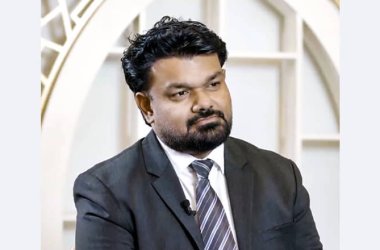



Ashraf Hassan, General Manager, Lenovo Infrastructure Group, Gulf, has written an exclusive op-ed for tahawultech.com that has made the case on how datacenters must evolve in order to mee the digital expectations and demands of the United Arab Emirates.
The issue of where in the world data is stored and processed is set to be one of the defining debates of technology in the 21st century.
‘Data sovereignty’ – the principle that data is subject to the laws and governance structures of the country or region where it is collected, stored, or processed – is an increasingly high priority both for legislators and IT decision-makers.
In the UAE, this topic is of particular importance, given the nation’s ambition to lead digital transformation in the Middle East and its focus on building trust in data governance. This focus is further amplified by the UAE’s efforts to position itself as a hub for AI innovation and data-driven industries under its visionary UAE Artificial Intelligence Strategy 2031.
These factors are set to have a defining influence on how – and where – datacenters are built.
Alongside concerns such as latency (allowing for the delivery of speed-dependent services such as edge computing) and sustainability, control over where data resides and is processed is crucial. For UAE businesses and government entities, data sovereignty has become fundamental to balancing compliance, security, and innovation.
Where Data Resides
In the UAE, the pressure to localize and secure cloud and IT infrastructure is growing, as global regulatory frameworks increasingly converge and digital economies play a larger role. Recent amendments to the UAE Federal Decree Law No. 45 of 2021 (Personal Data Protection Law) emphasize ensuring data governance that aligns with local legislation.
This renewed push for digital sovereignty complements similar efforts globally, but in the UAE, it reflects the country’s distinct strategic focus on remaining competitive in sectors like finance, energy, and smart cities.
The importance of data sovereignty is growing not just among policymakers but also within the IT industry. From the location of datacenters to where AI workloads are processed, this issue now defines operational strategies.
For both private enterprises and public institutions in the UAE, sovereignty is becoming a cornerstone in how trust is built and resilience is maintained in increasingly data-centric operations.
Growing Demands
The rising adoption of AI in the UAE is driving exponential data creation—particularly in sectors like healthcare, logistics, and government services, where digital transformation has seen significant investment.
AI workloads not only generate more data but also increase the power requirements of data centres hosting this data. Globally, electricity demand from AI-driven data centres is projected to more than double by 2030, and localized figures show similar trends in the GCC region, which is increasingly dependent on high-energy IT and cloud infrastructures.
Meeting these demands presents a dual challenge for UAE-based enterprises: scaling IT infrastructure for an AI-powered future while ensuring compliance with data regulations and sustainability requirements.
For organizations in the UAE, sovereignty is more than a technical or operational goal – it is a competitive factor with implications for trust, economic productivity, and alignment with broader national goals like sustainability partnerships outlined in the UAE Net Zero by 2050 initiative.
The Data Centre of the Future
The UAE’s digital ambitions mean today’s datacenters must evolve. They will need to scale AI workloads sustainably while addressing sovereignty requirements. For the UAE — home to both global enterprises and regional startups, as well as major government-led smart initiatives — this balance becomes especially critical.
Datacenters in the UAE will also need to address latency challenges. Real-time applications such as autonomous vehicles and smart city innovations demand speed and reliability, which in turn require a distributed data ecosystem.
Latency and localization are becoming key operational metrics for IT decision-makers, with 94% of industry leaders globally identifying latency as critical for the years ahead.
This is especially relevant for UAE initiatives like autonomous mobility and advanced e-government services, which depend on low-latency network infrastructure supported by secure, sovereign data processing.
However, energy efficiency remains a challenge, as nearly half of IT leaders globally admit their infrastructure does not yet support carbon-reduction or sustainability goals.
In the UAE, where renewable energy projects like Mohammed bin Rashid Al Maktoum Solar Park are gaining momentum, aligning data strategies with sustainable development frameworks is increasingly essential.
Innovative cooling technologies, like those pioneered by Lenovo, are key to achieving this. Warm water cooling, for instance, removes 98% of system heat at the source, drastically reducing electricity use while allowing data centres to scale AI-driven workloads responsibly.
Conceptual datacenters designs from Lenovo also offer unique solutions for sovereign and sustainable IT infrastructure:
- The Data Village: A modular datacenters situated near water sources like Dubai Creek, which leverages liquid cooling for energy efficiency and transfers waste heat to power amenities within smart urban environments.
- The Data Bunker: Built in disused UAE infrastructure such as tunnels or underground bunkers, this approach would minimize land use, reduce operating temperatures through natural cooling, and serve projects requiring ultra-resilient security — ideal for government entities or financial institutions.
- The Floating Cloud: While unconventional and futuristic, this airborne solution could provide autonomous governance for data across the UAE, leveraging 24/7 solar energy while maintaining compliance through jurisdiction-specific operational zones.
Towards a Smarter, Sovereign Future
The next decade will see the UAE redefine the role of datacenters, balancing AI demands with the regulatory imperatives of national data sovereignty. Policymakers, technology providers, and IT leaders alike must work together to forge innovative solutions that align with local governance ambitions and sustainability commitments.
Lenovo’s advanced hybrid offerings stand out as a model for flexibility, enabling organizations to meet not only sovereignty requirements but also sustainability and scalability needs. As the UAE drives forward its vision for a technology-led economy, embracing digital independence will be critical to long-term resilience, trust, and innovation.
By preparing today, UAE decision-makers can build data infrastructure that embodies sovereignty while empowering industries that will define the region’s future.