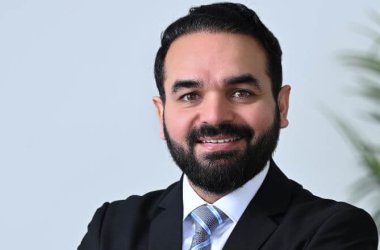




Dr. Yajulu Medury highlights the UAE’s growing role as a global education and innovation hub.
Higher education is undergoing a profound shift shaped by artificial intelligence, interdisciplinary learning, and the growing demand for future-ready skills.
Traditional academic silos are giving way to more flexible models that combine research, digital fluency, and human-centred capabilities, redefining how universities prepare students for a rapidly evolving global workforce.
The Middle East—particularly the UAE—has positioned itself as a leading hub for education innovation, backed by strong investments in technology and international academic partnerships. India’s higher education ecosystem is evolving in parallel, opening new avenues for collaboration, knowledge exchange, and talent development between the two regions.
During his visit to Dubai, Dr. Yajulu Medury, Vice Chancellor of Mahindra University, offered perspectives on the changing role of universities, the convergence of Indian and Middle Eastern education ecosystems, and the importance of embedding research and interdisciplinary learning from the undergraduate level onwards.
Mahindra University — located in Hyderabad, India — has around 6,000 students across schools of engineering, management, law, design, media, hospitality, and education, with engineering being the largest cohort.
With more than three decades of academic and administrative leadership, Dr. Medury underscores the need for the future of education to balance technological advancement with critical thinking, creativity, and human connection.
Interview Excerpts:
What is the objective of your visit to Dubai, and how do you view the Middle East’s transformation in education?
I have been visiting the Middle East since the late 1990s, and the transformation has been remarkable. Even 25 years ago, the establishment of academic hubs such as Dubai Academic City and the arrival of Indian institutions signalled a strong alignment between the region and Indian higher education.
Today, the Middle East—particularly the UAE—is leapfrogging in areas such as artificial intelligence, with significant investments and long-term vision. India and the Middle East share a deeply interconnected future. Mahindra University’s visit aims to strengthen academic partnerships, engage the expatriate community, and explore research and education collaborations with regional universities.
Where do you see the UAE and Middle East heading in terms of the education sector?
The region is moving decisively towards future-ready education models. The focus on AI, technology-driven learning, and international collaboration is shaping a progressive ecosystem. What the Middle East implemented 25 years ago by welcoming global campuses, India is now beginning to do.This shared trajectory, supported by policy initiatives and bilateral agreements, will allow both regions to complement each other and co-create talent for the global economy.
What advice would you give to today’s students navigating changing career trends?
Education today is inherently interdisciplinary. No student can operate in a silo anymore. Even a discipline like computer science must integrate humanities, psychology, design, and communication. The more domains a student understands, the more adaptable and relevant they become. Whether it is business analytics, AI, or digital media, learning now requires a blend of technical skills, analytical thinking, and contextual understanding.
How important is digital literacy, and how should students approach it?
Digital literacy is no longer optional—it is becoming the DNA of education. Formal degrees and certifications remain important as they validate expertise. However, tools such as generative AI should be used intelligently.
“Students must analyse, question, and build upon what technology provides, rather than relying on it passively. Technology should assist learning, not replace critical thinking.”
Are online or hybrid learning options available for students based in the UAE?
Having completed five years as a university, we are now eligible to offer online programmes. This opens opportunities for students in the UAE to pursue online courses, combine them with on-campus learning, or engage through micro-credentials. Education is becoming flexible, modular, and lifelong.
How is Mahindra University embedding research from the undergraduate level onward?
Research engagement begins from the moment students enter the campus. Students are encouraged to work closely with faculty on live research projects across areas such as sustainability, risk management, and technology. Many undergraduates present their work at international conferences, which builds confidence, global exposure, and academic credibility early in their careers.
What differentiates Mahindra University’s interdisciplinary approach from traditional universities?
We consciously avoid silo-based education. Alongside core disciplines, students undertake humanities and foundational courses that enhance communication, critical thinking, and business awareness. Students can also choose electives across schools—for example, a computer science student can study design or media-related courses. This flexibility allows students to align education with their interests and emerging industry needs.
What advice would you give to parents in today’s rapidly changing education landscape?
Parents should avoid imposing their aspirations on their children. That approach is often counterproductive. Today’s students are well-informed and aware of their interests. When students pursue fields they genuinely care about, they perform better and find long-term satisfaction. Parents should act as enablers rather than decision-makers.
How do you view skill-based education in the current context?
Education today is fundamentally skill-driven. Whether it is programming, analytics, hospitality, or specialised cuisines, skills define employability. Academic programmes must integrate practical, industry-relevant skills alongside theory.
What future trends do you anticipate in education over the next few years?
While AI will play a larger role, education will remain deeply human. The pandemic showed us that students value social interaction, peer learning, and community engagement. Technology can enhance delivery, but it cannot replace the social and emotional dimensions of learning. Education of the future will balance advanced technology with human connection.