


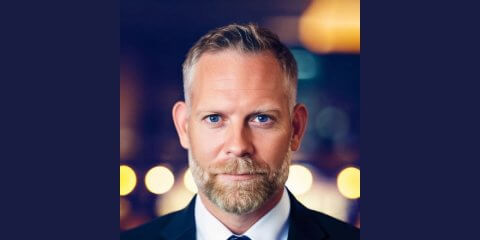
Scott Wilcox of Sicuro Group shares a practitioner’s view on how resilience and intelligence are redefining risk in the UAE.
The UAE’s rise as a global hub for trade, energy, and digital infrastructure has been matched by a deliberate and highly integrated approach to risk management that prioritises coordination, speed, and real-time decision-making over fragmented or imported frameworks.
From cybersecurity and intelligence to crisis response and business continuity, the country has aligned its risk architecture to address the realities of operating in high-consequence environments. Risk is no longer treated as a compliance requirement or a defensive function; it is increasingly viewed as a strategic lever for economic continuity and long-term growth. Investments in cybersecurity, data sovereignty, and critical infrastructure continue to accelerate, supported by a strong emphasis on capability-building through training, simulations, and operational readiness.
Artificial intelligence is also playing a growing role in reshaping threat intelligence and incident response, helping organisations filter complexity and act faster. Yet, the UAE’s approach remains pragmatic, leveraging AI to enhance decision-making while retaining human accountability in high-stakes scenarios.
Scott Wilcox, Senior Advisor and Founder of Sicuro Group, spoke to Tahawultech.com on how the UAE’s evolving risk ecosystem is influencing global best practices and what it means for organisations operating in increasingly complex and interconnected markets.
Interview Excerpts:
How has the UAE developed an integrated and advanced national risk-management ecosystem, and what future developments do you anticipate in this space?
The UAE built its risk-management ecosystem by avoiding one-size-fits-all imported models and instead designing frameworks suited to its role as a global trade, energy, and data hub. It aligned cybersecurity, physical security, intelligence, crisis response, business continuity, and public communications under clear national structures that prioritise coordination and fast decision-making. A key strength is its focus on testing readiness through national exercises, sector-wide simulations, and live incident response, using identified gaps to improve systems continuously. Looking ahead, the next phase will likely bring deeper convergence of cyber, physical, and information risk, a stronger emphasis on demonstrable readiness over static compliance, and a more controlled use of AI in decision support while keeping human accountability central.
What investment trends are currently accelerating the growth of the UAE’s broader security ecosystem? Security investment in the UAE has moved well beyond defence and is now tied to resilience, economic continuity, and strategic autonomy. Spending remains strong in cybersecurity, cloud security, data sovereignty, and critical infrastructure, including ports, aviation, energy, logistics, and smart cities.The UAE is also investing heavily in training, exercises, and operational capability, recognising that technology is only as strong as the people managing it. At the same time, the market is becoming more selective, favouring firms that can prove execution in high-pressure environments.
What measures can businesses operating in the UAE implement to ensure a secure and resilient environment, particularly when expanding into new international markets?
The UAE demands practical, not theoretical, security. Organisations must identify and quantify their risks, then make clear decisions on how to manage them. Ignoring risk is simply not an option. Success starts with clarity over decision rights, who declares an incident, approves costs, communicates externally, and coordinates across markets. It also depends on turning intelligence into action, not just collecting alerts and dashboards. For businesses expanding internationally, localising risk models is essential. Generic assumptions rarely hold up in real conditions, while local partners and on-ground capability make a critical difference. Ultimately, the strongest organisations treat resilience as an operational discipline, not a policy statement.
Why is the UAE becoming a preferred destination both for new security firms and for global security companies establishing their regional headquarters?
From a business perspective, the UAE attracts serious global security and risk-management firms because of its unmatched connectivity and reach. Regulatory expectations are clear. Engagement with government and regulators is direct. Decision-makers are accessible, and feedback loops are short. For firms operating across the Middle East, Africa, and much of Asia, the UAE offers proximity and connectivity that cannot be replicated from Europe or the Americas.
“The UAE has become both a regional hub and a proving ground for globally relevant security capabilities.”
In what ways is artificial intelligence reshaping threat intelligence, security operations, and incident response across the UAE?
AI is being adopted pragmatically rather than ideologically. Its primary impact is in reducing friction: filtering noise, surfacing weak signals, and accelerating triage across cyber threats, fraud indicators, insider risk, and operational anomalies. During incidents, AI supports faster situational awareness and decision support. What the UAE has largely avoided is the temptation to automate judgment. High-consequence environments still demand human accountability, context, and experience. The most effective deployments pair AI with experienced operators who understand both the data and the consequences of acting on it.AI is a force multiplier, not a substitute for leadership.
Sicuro Group recently launched an AI-assisted Return on Risk Scorecard. What gap does this tool address?
It addresses a translation gap. Risk teams often present exposure through matrices, colour codes, and probability scores, while boards and the C-suite make decisions based on financial outcomes. The Return on Risk Scorecard translates security risk into business language by quantifying exposure, treatment costs, and return on risk in financial terms. It also helps bring risk into decision-making earlier. Instead of being engaged after a crisis or once an expansion is already underway, organisations can use the tool at the front end of market entry, acquisitions, or partnerships to make more informed, value-driven decisions.
How can UAE-based companies strengthen their defenses against key risks such as fraud, cybersecurity threats, insurance-related exposures, and other operational vulnerabilities?
Organisations should integrate fraud, cyber, legal, insurance, and operational risk functions so intelligence flows horizontally rather than vertically. Insurance coverage must be aligned with actual response capability, not optimistic assumptions about third-party support. Critical dependencies should be mapped and stress-tested regularly, including suppliers, data flows, and key individuals. Finally, organisations should invest in trusted local and regional partners. In every major incident, proximity and relationships matter more than contractual promises. Effective risk management requires accepting uncertainty, designing for disruption, and prioritising preparedness over reassurance.