



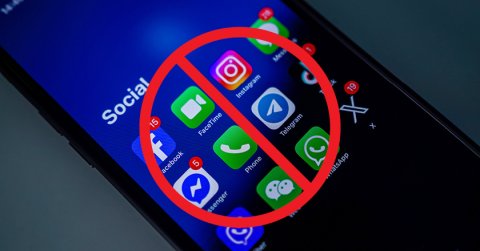
The UK government has recently announced its plans to ban under 16 year-olds from social media and impose wider restrictions on gaming and live-streaming platforms in a landmark intervention to protect children online.
The measures would cover social media platforms including Snapchat, TikTok, Instagram, YouTube, Facebook and X, but exclude messaging services such as WhatsApp and Signal. UK Prime Minister Keir Starmer said the move would “give kids their childhood back”, adding it represents “a line in the sand” as “tech giants had their chance and failed”.
The government is also considering overnight curfews and breaks in infinite scrolling for under-18s. It explained restrictions on some functions would remain on by default even for 16 and 17-year-old users, to avoid a “cliff-edge at 16”.
In addition, the government is seeking restrictions on a wider range of online services viewed as higher risk for children, including live-streaming and communication with adult strangers through gaming websites. AI services designed to simulate intimate relationships with users would face a minimum age limit of 18, with similar functions also set to become age-restricted across wider AI chatbots.
The proposal will be brought to Parliament by the end of the year, with measures due to come into force in spring 2027.
The announcement follows a consultation earlier this year that drew more than 116,000 responses. Nine in 10 parents backed a social media ban for under-16s, while two-thirds of young people agreed children younger than 16 should be barred from using at least some platforms.
Technology secretary Liz Kendall said the government was “taking power away from the tech giants and putting it back in parents’ hands”.
Punitive measure
The government explained it plans to use “the same model for a social media ban as Australia”, which became the first country in the world to outright ban platforms for under-16s last year. However, it added it will also “learn the lessons from Australia’s experience” by introducing strict age verification measures that will prove tougher to bypass. UK watchdog Ofcom will be tasked with researching effective age assurance measures, with Kendall adding the government would ensure the regulator has the funding needed to take on additional responsibility.
Megan Jenkins, research analyst at Assembly Research, said the speed of the UK’s decision makes it “highly questionable”, adding the government appeared to have chosen “what feels like a punitive measure for children” rather than making social media platforms “safer by design”.
Meanwhile, safety technology company Privately SA’s CEO Deepak Tewari warned that while stronger online protections are necessary, age checks must avoid creating “a surveillance infrastructure for children”.
“If age assurance is to become part of online safety policy, the industry must put its money where its mouth is: prove that age checks can be effective, proportionate and genuinely privacy-preserving”, he argued.
Source: Mobile World Live
Image Credit: ShutterStock