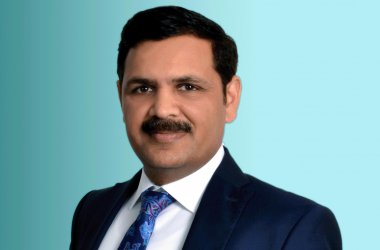


Dealerships are struggling to keep pace with disruption in automotive industry, AI, electrification, mobility services, and evolving customer expectations. Shashank Pincha, CTIO, IntelliSoft, explains how autoX is helping automotive businesses unify operations, enhance customer engagement, optimize operations, and boost revenue.
The automotive sector is at a pivotal moment, where AI, digital transformation, electrification, and evolving mobility models are reshaping how vehicles are sold, serviced, financed, and managed. Dealerships and OEMs are under increasing pressure to modernise legacy systems, unlock the value of data, improve operational efficiency, and deliver seamless customer experiences across multiple channels.
IntelliSoft’s autoX, a next-generation automotive business platform built on SAP Cloud ERP, designed to connect every aspect of the automotive value chain within a single intelligent ecosystem. From sales and aftersales to leasing, rental, used vehicles, marketplace, procurement, finance, human capital and customer engagement, the platform aims to help automotive businesses accelerate digital transformation while improving visibility, agility, and profitability.
Shashank Pincha, CTIO at IntelliSoft, shares his perspectives on the industry’s biggest challenges, the growing role of AI and analytics, the rise of mobility-based business models, and how autoX is enabling automotive organisations to build future-ready operations.
Interview Excerpts:
What are the key operational and business challenges automotive OEMs and dealers are facing as the industry transitions toward AI-driven digital platforms? Automotive OEMs & Dealers are facing a major operational shift because customer expectations, buying patterns, electrification, software-defined vehicles, new mobility models, geopolitical uncertainty, Supply chain disruptions and the entire automotive ecosystem are changing simultaneously. The disruption is no longer only about assembly and selling cars – it is about transforming operations into a digitally connected, customer-centric business model. Many dealerships still operate on outdated GUI-based systems with poor user experience, rigid processes, and limited flexibility to adapt to evolving business requirements. Data extraction and standardisation also remain a challenge, limiting the ability for Analytics and leverage of AI and automation effectively.
Inadequate controls in a DMS environment lead to revenue leakage across dealership operations. Some of the common leakage areas are – No approval workflow for discounts, Sales advisors overriding pricing manually, Unauthorised promotional pricing, Manual invoice edits after approval and Lack of role-based access controls. Other major challenges are lack of embedded real-time analytics and actionable insights, disconnected multiple applications. Further many dealers remain heavily dependent on OEMs or vendors for application improvements and enhancements thereby limiting their ability to adapt with current business requirements.
autoX is positioned as more than a traditional DMS. How does it enable a connected ecosystem across sales, service, leasing, and partner networks?
autoX is designed as a complete automotive business platform built on fully integrated SAP Cloud ERP Private, rather than just a traditional DMS. The platform includes a built-in integration suite that enables seamless connectivity with OEM systems, third-party applications, payment gateways, mobility platforms, and other external ecosystems.
“autoX combines modern SAP Fiori-based user experience with embedded analytics, allowing users to access real-time operational insights and make faster business decisions.”
Unlike conventional DMS platforms, autoX provides an integrated ERP-driven ecosystem covering Customer Relationship Management, sales force automation, procurement, aftersales, used vehicle management, leasing, in-house finance, rental, fleet management and financials- eliminating the need for multiple standalone applications. It also incorporates AI-enabled mobility for employees and customers, commerce capabilities including B2B vendor portal, B2B parts portal, B2C website integration for vehicle sales, pre-owned digital marketplace, AI voice agents, and conversational AI experiences.
Used vehicle business remains a challenge for many dealerships. How can autoX help improve visibility, efficiency, and revenue recovery in the pre-owned vehicle segment?
The used vehicle market has become highly competitive, especially with the growth of independent digital marketplaces across the GCC. Many dealerships have lost market share because traditional DMS platforms were not designed for modern digital used-car operations. autoX supports the complete pre-owned vehicle lifecycle including trade-ins, procurement, refurbishment, inventory management, pricing, and sales. Beyond traditional dealership processes, autoX enables dealers to launch their own digital marketplace where individual vehicle owners, traders, and used car dealers can list vehicles and transact digitally. The platform supports multiple transaction models including self-sales, assisted sales, and dealership purchases, while integrating directly with SAP, payment gateways, CRM, and analytics. This helps dealerships regain lost revenue, improve inventory visibility, reduce vehicle aging, and deliver a modern digital buying experience.
Traditional DMS platforms often lack seamless vendor collaboration capabilities. How does autoX streamline and automate procurement and supplier management processes?
Traditional DMS platforms often rely on manual procurement and supplier communication processes. autoX addresses this through an integrated B2B vendor portal that allows dealerships to digitally publish RFQs and enables suppliers to submit quotations and responses online. The platform supports end-to-end procurement workflows including approvals, purchase orders, goods receipt, invoicing, and payment integration within SAP Cloud ERP Private. For parts operations, autoX also supports forecast-based procurement, back-to-back ordering, supersession management, and vendor catalogue integration.
“By digitising supplier collaboration and integrating procurement with finance, inventory, and operations, autoX improves transparency, reduces manual effort, and streamlines procurement processes.”
How important is data standardisation and integration across OEMs, dealers, and third-party platforms, and how does autoX address this requirement?
Data standardisation and integration are critical in the automotive industry because dealerships constantly exchange information with OEMs, suppliers, logistics providers, financial institutions, and third-party platforms. Without standardised integrations, dealerships face operational inefficiencies, inconsistent reporting, and poor customer experiences. autoX addresses this through prebuilt two-way integration capabilities powered by SAP Integration Suite. The platform supports seamless data exchange for vehicles, parts, pricing, procurement, inventory, warranty, sales, and financial transactions between OEMs and dealers. Because autoX operates on a unified ERP-based architecture, it also standardises data across sales, service, leasing, finance, procurement, and CRM, creating a single source of truth for the organisation.
Many automotive dealers now operate with FMCG-like sales models for certain product lines. How does autoX support such fast-moving, high-volume sales processes, particularly through sales force automation?
Many automotive businesses today operate FMCG-like sales models for products such as lubricants, tires, batteries, accessories, and spare parts, requiring high-volume field sales and mobility-driven operations. autoX supports this through integrated Sales Force Automation capabilities. Sales teams can plan daily, weekly, or monthly customer routes using geo-coordinates for route optimisation. Using mobile applications, sales personnel can capture visit notes, images, videos, follow-up tasks and create quotations or sales orders directly from the field. The platform also provides analytics to monitor visits, sales performance, route adherence, customer coverage, and productivity. All field activities are connected with real-time inventory, pricing, CRM, and finance in real time, enabling faster execution and better operational visibility.
Can you share a recent implementation where autoX delivered measurable improvements in operational or business outcomes for a dealer or distributor?
A recent example is the implementation for Towell Auto Group in Oman representing brands such as Mazda, Geely, Lynk & Co, JAC Motors, and Higer. The project involved SAP S/4HANA with autoX covering finance, procurement, warehouse management, sales, service, and operational processes within a unified digital platform. The implementation helped digitalise end-to-end operations, improve process efficiency, enhance operational visibility, and provide better customer engagement through integrated workflows and real-time analytics. It also enabled stronger process standardisation and provided a scalable foundation for future growth and innovation.
“IntelliSoft recently signed strategic digital transformation engagements with major automotive groups such as Teyseer Motors in Qatar and Mohsin Haider Darwish in Oman, further validating the growing adoption of autoX across the region.”
With leasing and subscription-based models gaining momentum, how are dealerships evolving their business models, and how does autoX support this transition?
Customer expectations are shifting toward flexible mobility models, especially among younger consumers who increasingly prefer leasing and subscription services over traditional ownership. Dealerships are therefore evolving from pure vehicle sales businesses into broader mobility service providers. autoX supports this transition through a fully integrated, IFRS 16-compliant leasing and subscription management solution within SAP Cloud ERP Private. The platform supports the complete leasing lifecycle including quotations, contracts, billing, renewals, fleet management, maintenance integration, and financial accounting along with post-dated cheque management in a single system. Apart from Leasing, autoX also provided end-to-end solution for In-house finance.
Rental operations are often underserved by traditional DMS platforms, leading to reliance on third-party systems and integration complexity. How does autoX address rental and fleet management requirements within a unified platform?
Traditionally, rental and fleet operations have relied on standalone applications that create integration complexity and fragmented operations.
“autoX offers a fully integrated end-to-end rental and fleet management solution within SAP Cloud ERP Private, eliminating the need for separate rental systems.”
The platform supports vehicle availability, reservations, contracts, billing, maintenance, fleet utilisation, driver management, and vehicle returns within a single platform. Because rental operations are integrated with finance, procurement, workshop management, CRM, and inventory, businesses gain complete operational and financial visibility across the fleet lifecycle. This unified approach improves efficiency, reduces integration overhead, and enables better fleet utilisation and customer experience.
What are the challenges you face during customer engagements and how they can be mitigated?
One of the most common challenges during digital transformation initiatives is resistance to change from users who are accustomed to existing DMS platforms and established ways of working. Employees may have concerns about adapting to new technologies, learning new processes, or the impact of automation on their roles. Modern digital platforms eliminate process gaps, manual overrides, and operational inefficiencies that may have existed within legacy environments. While this improves governance, compliance, and profitability for the organization, it can sometimes create resistance from users who are comfortable with existing practices. Addressing this requires strong leadership sponsorship, transparent communication, and helping employees understand how digital transformation creates long-term value for both the business and its workforce.
What are the future roadmap priorities and expansion plans for autoX?
One of the key priorities for autoX is geographical expansion into new automotive markets globally. The roadmap also focuses on strengthening AI capabilities, mobility, analytics, commerce, and connected vehicles within the platform. Another major focus area is extending automotive best practices into vehicle and equipment assembly and manufacturing operations to support OEMs running SAP environments. This includes enhancing capabilities around production planning, manufacturing / assembly, supply chain integration, procurement, and connected aftersales operations. The long-term vision is to position autoX as a comprehensive automotive digital platform connecting OEMs, distributors, dealers, suppliers, mobility providers, and customers within one intelligent SAP-powered ecosystem.