



Cisco’s State of Wireless Report reveals how UAE organisations are driving productivity, efficiency, and revenue growth by treating wireless infrastructure as a strategic business investment rather than a basic IT utility.
Wireless networks are moving from back-end infrastructure to boardroom priority as UAE organisations accelerate AI, IoT and connected business models. For enterprises, wireless investment is no longer only about coverage or connectivity; it is becoming a foundation for productivity, operational efficiency, customer engagement and revenue growth.
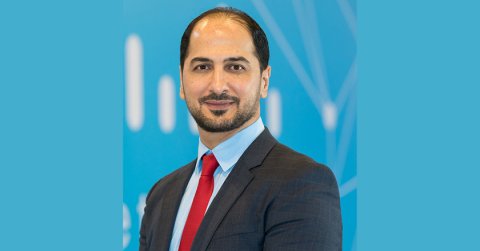
Cisco’s State of Wireless Report highlights this shift, showing how modern wireless infrastructure can create a “multiplier effect” across the enterprise, while also exposing new challenges around complexity, security and skills. Mohannad Abuissa, Managing Director of Solutions Engineering & CTO at Cisco for the Middle East, Africa, Turkey, Romania and the CIS, explains why UAE businesses must now view wireless as a strategic asset for resilience, competitiveness and AI-ready growth.
Interview Excerpts:
Cisco’s State of Wireless Report is a comprehensive, detailed, and layered study. However, can you provide us with more information on why organisations in the UAE are now treating wireless investment as a strategic business priority rather than just an IT necessity?
We have moved past the era where Wi-Fi was just a utility like electricity. In the UAE, we’re seeing a real shift. Organisations aren’t just looking for “better coverage”; they’re looking for a foundation for growth. With the rapid adoption of AI and IoT, the network has become the heartbeat of the business. When organisations treat wireless as a strategic asset, they aren’t just connecting devices; they’re enabling employees to be more productive, operations to be more efficient, and customers to have a better experience. It’s no longer about keeping the lights on; it’s about fueling the business.
What does the report mean by the “multiplier effect”? Can you explain this term in more detail – and how are wireless investments creating “real business value” when it comes to day-to-day operations, employee and customer experience, and overall revenue?
Think of the “multiplier effect” as a domino reaction. When you invest in a modern, robust wireless network, the benefits don’t stay in the IT department. They ripple out. A single wireless investment can generate value across multiple parts of the organisation. It connects employees, guests, IoT devices, and in-field assets. It likely forms the backbone of everything from operations systems and AI workloads to your physical security devices and wayfinding systems. The data backs this up: 89% of organisations in the UAE are seeing real operational efficiency, 88% are seeing more productive employees, and 82% are seeing a direct impact on customer engagement. Combining those, it’s no surprise that 83% of businesses are seeing a direct boost to their bottom line. It’s not just one win; it’s a series of wins across the entire organisation.
The report highlights a “wireless AI paradox”. Can you explain this concept and discuss both the opportunities and challenges it presents for UAE organisations?
The “wireless AI paradox” refers to the fact that while AI is a primary driver of wireless return on investment (ROI), it may also increase operational complexity, security risks and competition for talent. It’s a bit of a double-edged sword. On one hand, AI is the biggest driver for wireless ROI we’ve seen in years. On the other, it’s creating a massive headache for IT teams. As AI workloads and connected environments expand, 97% of businesses in the country are reporting that wireless operations are becoming more complex and 67% spend most of their time on reactive troubleshooting and incident management. In terms of cybersecurity, AI-generated or automated cyberattacks are emerging as a leading source of wireless security risk. In the UAE, 83% of organisations have experienced at least one wireless security incident in the last 12 months. Talent shortages are adding further pressure.
“With IT professionals shifting towards AI and cybersecurity roles, 86% of UAE businesses find it challenging to hire qualified and experienced wireless specialists.”
Cisco suggests that simplifying operations, strengthening security, and investing in skills are key priorities. Why are these areas critical for maximising ROI from wireless infrastructure?
It comes down to a sustained business value. If your IT team is spending all their time troubleshooting, they aren’t building the future. Our report shows that 87% of organisations are struggling with visibility gaps; they literally can’t see what’s going wrong in their network. Simplifying operations gives IT teams the visibility and automation they need to manage rising complexity with confidence. And then there’s the security side. We’re talking about 58% of businesses suffering financial damage from security incidents, with many losing over US$1 million. That’s not just a technical glitch; that’s a major business risk. Finally, we can’t ignore the talent gap. When teams are burnt out from managing complexity, innovation stops. By simplifying and automating, you’re not just saving money; you’re giving people the space to actually do the work that drives growth.
Based on the statistics shared in the report, there is a clear emphasis placed on core components, such as efficiency, productivity, engagement and revenue – but what business case would you make to senior leadership for increasing wireless investment?
I would tell them that this isn’t just an “IT upgrade”; it’s an investment in the company’s resilience. We’re moving into a future where AI-driven business is the norm, and you simply cannot run an AI-first business on a legacy network. The ROI is already measurable. We are seeing it in the efficiency, the productivity, and the revenue growth across the UAE. If you want to stay competitive over the next five years, you need a network that can handle the load. Investing in wireless today is essentially buying an insurance policy for your future competitiveness. It’s about being ready for what’s next, rather than just reacting to today’s problems.