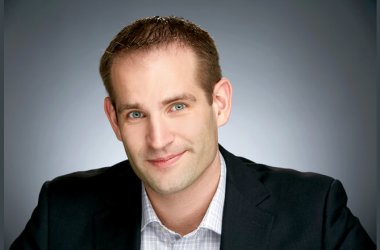



CNME Editor Mark Forker, spoke to Khalid Aljamed, General Manager, Middle East, Turkey, and Africa at Submer, to learn how the company have positioned themselves as a trusted advisor and partner to several enterprises and government entities, who are attempting to capitalize on the burgeoning opportunities that are emerging in the AI datacenter ecosystem across the Middle East region.

Khalid Aljamed has spent the last two decades driving digital transformation across the telecommunications, cybersecurity, and datacenter infrastructure space.
In a decorated career to date, Aljamed has consistently demonstrated his ability to drive, lead, and execute on large-scale initiatives with national operators, global technology leaders, and government-backed megaprojects.
He has worked for companies such as Alcatel-Lucent and Nozomi Networks in the KSA, but he is perhaps best-known in the IT ecosystem across the Middle East for his time at Cisco, where he spent 12 years.
In July 2025, Aljamed made the move to Submer, a Spanish-headquartered datacenter solution provider that specialize in next-generation cooling and automation for energy-intensive datacenters, now needed more than ever, amidst the rise of AI-driven datacenters.
In a candid conversation, the charismatic Aljamed articulates what he feels makes them standout from a marketplace, in which he concedes contains a lot of different players.
Aljamed kickstarted the conversation by highlighting the importance of the decision by Submer in October 2025, to establish a subsidiary in Saudi Arabia for its MEA-Turkey operations.
Aljamed outlined that there was a combination of factors that drove the decision, but ultimately stressed the need for a ‘local presence’ when referring to Submer establishing a subsidiary in Saudi Arabia for its MEA-Turkey operations.
“I think for context it is important to highlight how a whole host of international players are investing heavily into the datacenter space in a bid to capitalize on the vast opportunities that are emerging within that ecosystem. Our decision to establish a regional subsidiary was a strategic one that was driven by our CEO and key investors. It is quite evident that there is huge transformation underway in the KSA and the UAE, and to varying degrees in other parts of the Middle East. Undoubtedly, there is a huge appetite to consume and deploy AI and cloud technologies in the KSA and the UAE, and we feel it is fundamentally important for us to be physically on the ground,” said Aljamed.
Aljamed added that his team was a fusion of local talent and experts that have been at Submer from Day 1, and that by having a base locally enabled them to accelerate their growth across the region.
“It allows us to operate at speed and meet the scale that is required following the announcements of mega projects like Stargate in the UAE. We need a local presence, and you need local teams on the ground for rapid deployment. It also helps to have international experience, and this is why what I am building is a mix of local talent in both the KSA and UAE, combined with experts from Spain, where the company is headquartered to really scale out and drive growth right across the Middle East, Africa and Turkey marketplaces,” said Aljamed.
Since its inception in 2015, Submer has established itself as an innovative datacenter solution provider, but as Aljamed pointed out, the company has undergone its own transformation in relation to their business model.
Submer are still focused on creating solutions that scale smarter, run cleaner, and cost less, but they have pivoted towards consultancy and advisory services.
“As a company Submer has evolved over the years. Traditionally, we focused heavily in crypto and cooling, but we have now pivoted towards what comes before the cooling element. We noticed a gap in the market, and what we are trying to deliver to this market is advisory services on AI datacenters, and it is quite a unique offering. We have conversations internally with the customers in relation to the design and build of these AI datacenters. We work very closely with local governments, sovereign funds and global hyper-scalers like AWS and Microsoft to try and build the ecosystem that is required to deliver these AI datacenters at scale,” said Aljamed.
Aljamed highlighted how the strong alliances they have forged with some of the world’s leading players in the AI space have solidified their position with many of their customers.
“Our relationships with leading players from the AI movement, such as Nvidia and AMD, have accelerated at phenomenal speed over the last 6-12 months. They are at the heart of the transformation in the datacenter space and having that joint relationship with them puts us in a very comfortable position when we then start having conversations with prospective and existing customers,” said Aljamed.
Aljamed stressed his belief that more education around the AI datacenter ecosystem is needed, and highlighted how datacenters are attracting what previously would be seen as unconventional players.
“Look, when it comes to AI datacenters, it is important for people to understand and consider the three major components in that process. You have one element that is technology-based, the other side is focused on the land, and the final piece of the jigsaw is the energy demands. That is why so many companies, that were traditionally seen as real estate players are now making moves into this marketplace. At the same time, you’ve got a lot of traditional energy players entering the datacenter space too,” said Aljamed.
Remaining on the topic of energy demands, one of the biggest bones of contention and discontent around the entire AI datacenter hype, is the sheer energy that is required to run these AI Gigafactories, which will have enormous GPU models and compute power.
Aljamed then pointed to research that emerged from a recent report that demonstrate just how much energy bandwidth will be directed towards AI.
“We commissioned a report that found that by the end of 2025, almost half of all datacenters globally will be powered by AI systems. Over the last 30-40 years there has been so many datacenters constructed for governments, banks and large enterprises, but now in the space of just 2 years, almost half of that power will now be consumed by AI. At the end of the day, the more complex the compute is the more energy-intensive it becomes, and that’s why so much emphasis is being put on developing more capable GPUs,” said Aljamed.
Aljamed also said that by 2030, AI globally from an energy consumption perspective would be the equivalent of the entire consumption of Japan’s power.
He firmly believes that one of the ways to address this is to radically improve the efficiency of cooling systems.
“We must increase efficacy when it comes to cooling systems, whether that be direct to the chip, or immersive, improving its overall efficiency will play a major role in tackling the energy-intensity of AI demands. For example, if I take an existing datacenter that has legacy and I convert it to an AI-datacenter, although it is around 100x the compute capability, it would be 30% of the footprint, due to the way modern systems are now designed to be compact. However, another factor comes from the fact that with legacy datacenters we used to use air—cooling, but as we all know air-cooling is very energy-intensive, whereas liquid-cooling gives you a much smaller footprint. AI datacenters are exclusively greenfield, but when it comes to government entities who are interested in building an AI-driven data-lake for security, healthcare, and education in those cases they are brownfield. However, the industry across the board hasn’t really nailed down the brownfield migration piece, but I do believe that it is the next big wave,” said Aljamed.
The scale and volume of investments in the datacenter space is unprecedented, but as Aljamed points out that scramble to get a piece of the pie, has inevitably led to market saturation.
However, Aljamed is predicting that 2026 will be the year that we see the market become much leaner as a direct consequence of businesses adopting an acquisition strategy.
“There is huge demand across the datacenter industry for advisory and consultancy services, driven by a number of reasons, one of them is driven by the huge shortage that exists when it comes to memory and storage components, and then politically, we’ve seen visits to the UAE from the United States, and they’ve been trying to get approvals on different chipsets from the likes of AMD and Nvidia, so it’s a complex state of play. However, the investment appetite in datacenters is incredible. Huge investments in the datacenter ecosystem are being made in Europe, North America and of course, the Middle East. You have this fusion of landowners, investors, technology providers, and construction players all trying to come together to figure out what the best course of action is. We have seen this cycle before in security with SOCs, so if you ask me, I feel there is far too many companies in this space. I believe that over the next 12-24 months we will see a lot more consolidation and mergers and acquisitions happen and that will ultimately strengthen the market even further,” said Aljamed.
Aljamed reinforced the importance of building strong alliances with the leading players at the center of this movement.
Submer have those relationships, but Aljamed reemphasized the need to remain agile due to the fast-paced and at times volatile nature of the market.
In terms of what differentiates Submer in a market that we have already alluded to is at saturation point. Aljamed pointed to the diversity and broad range of skills within their organization.
“For us to standout, and bring value to the region, we focus heavily on building teams packed with skilled individuals that come from different backgrounds, and a prime example of that is one of our Chief Engineers, who has a PhD in Thermodynamics. I had a 12-year career at Cisco prior to joining Submer, and we have other people from consultancies like McKinsey, so we have a broad range of skillsets running right through the entire organization,” said Aljamed.
He brought a brilliant conversation to its conclusion by declaring that Submer wants to be an end-to-end partner for its customers who are embarking on this seismic transformation towards AI datacenters.
“What we are trying to project to our customers is that we are not trying to sell you a product or a service, we are here for the long-term. We want to be their partner, and we want to take them on that end-to-end journey to where they need to get to in the AI datacenter space, or as the trendy people call them AI Gigafactories. Whether our journey with them starts with consulting, advisory services, brokering, design and build phase, all the way to the IT integrations, it is all done with a view to being an end-to-end partner with them on that journey. That relationship doesn’t stop when the datacenter becomes operational, we need to determine how we optimize it, future proof it, and tomorrow if they want to upgrade it then we are there with them throughout the entire lifecycle,” said Aljamed.