



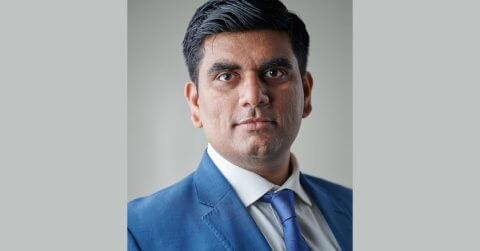
Gopan Sivasankaran, Regional Director, MEA, Rapid7, discusses how the region’s fast-moving AI ambitions are raising the stakes for cyber resilience, governance, and trust.
AI is rapidly reshaping the Middle East’s digital landscape, with national strategies such as Saudi Vision 2030 and the UAE’s innovation agenda accelerating adoption across government, critical infrastructure, and enterprise operations. Cyber adversaries are also harnessing AI to sharpen reconnaissance, automate attack pathways and make phishing and social engineering campaigns more targeted and convincing.
Gopan Sivasankaran, Regional Director, MEA, Rapid7, shared his perspective with Tahawultech.com on why governance, data protection, and digital sovereignty must now sit at the heart of regional cyber strategy.
Interview Excerpts
How is AI-driven transformation reshaping cyber risk across the Middle East as governments and enterprises accelerate digital adoption?
AI is accelerating digital transformation across the Middle East, with initiatives such as Saudi Vision 2030 and the UAE’s innovation strategies driving adoption across government, critical infrastructure, and enterprise operations. However, Rapid7’s 2026 Global Threat Landscape Report shows that threat actors are also using AI to scale reconnaissance, automate decision-making, and make phishing and social engineering attacks more convincing and harder to detect. The UAE Cybersecurity Council has similarly warned of rising AI-driven threats, including deepfakes, advanced phishing, and automated malware. Governance will also be critical. Data privacy, model security, and responsible AI use will become central to strategy. In this region, cyber risk is no longer just an IT issue; it is increasingly tied to digital sovereignty, making security and governance essential to sustaining digital ambition.
With identity-led attacks and AI-enabled social engineering on the rise, which threats should regional organisations prioritise in 2026?
Identity must be the top cybersecurity priority for 2026, as it has become the new control plane in modern digital environments. Compromised credentials, session hijacking, and privilege abuse remain some of the most effective attack paths, especially as organisations expand across cloud, SaaS, and hybrid infrastructure. Insider risk and third-party access also add to the challenge. While AI is increasing the speed and scale of attacks, core issues such as misconfigurations, weak access controls, and poor prioritisation still drive many breaches.
“Strengthening identity governance, improving visibility across access pathways, and reducing unnecessary exposure will be critical in 2026.”
As attack surfaces expand across cloud, smart infrastructure, and IT/OT environments, how should CISOs shift from reactive defence to proactive risk reduction?
The expansion of cloud, SaaS, smart infrastructure, and converged IT and OT environments has dramatically increased complexity. A reactive, alert-driven approach is no longer sufficient. CISOs need to move from measuring alert volume to measuring exposure reduction. Visibility alone does not create resilience. What matters is understanding which vulnerabilities are truly exploitable and which assets represent the highest business impact. Proactive risk reduction requires correlating live threat telemetry with validated exposure data. Instead of responding to alerts in isolation, security teams must prioritise weaknesses that adversaries are most likely to operationalise. In regions like the Middle East, where IT and OT environments increasingly intersect, preventing lateral movement across these domains is critical. A breach in IT can have real-world operational consequences. Unified visibility and prioritisation across the attack surface is essential.
What does Rapid7’s expansion into the UAE signal about your long-term commitment and growth strategy in the Middle East? Our expansion into the UAE reflects a clear long-term commitment to the region. Rapid7 has been supporting organisations across the Middle East for more than a decade, working with hundreds of customers across government, financial services, energy and enterprise sectors. What you are seeing now is the next phase of that journey as we deepen our investment and expand our regional presence. We have strengthened our physical presence with a new office in Dubai Internet City, which serves as a regional hub for our operations. In addition, Rapid7 has achieved certification from the Dubai Electronic Security Center (DESC), allowing us to support government and regulated sectors while aligning with the UAE’s cybersecurity framework.
You joined Rapid7 recently — what motivated the move, and where do you see the biggest opportunity for the company in the region?
I was motivated by the opportunity to help shape the next phase of cybersecurity in one of the world’s most dynamic digital regions. Rapid7 stood out for its leadership in both exposure management and MDR, a combination that is critical to shifting security operations from reactive response to a more preemptive model. Many organisations across the Middle East are still managing fragmented security environments while accelerating investments in cloud, AI and digital transformation. This creates a major opportunity to simplify operations, reduce exploitable risk and strengthen resilience. For me, the role brought together strong technology, a clear market direction and the chance to drive this vision in a region moving at remarkable speed.