


Ultra-compact design meets up to 1TB capacity and 400MB/s speeds, built for plug-and-stay convenience across modern USB-C devices
SanDisk has introduced the Extreme Fit USB-C flash drive, positioning it as the world’s smallest 1TB USB-C storage device. While the headline claim grabs attention, real-world usage reveals where this drive genuinely stands out — its “plug-and-stay” philosophy.
Design and usability: Built to disappear
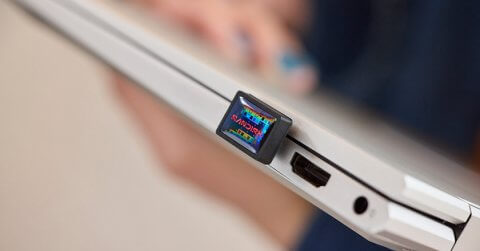
First impressions are dominated by size — or rather, the lack of it. The drive sits almost flush with a laptop’s USB-C port, making it easy to forget it’s even there. In everyday use, this becomes its biggest advantage. Unlike bulkier USB drives, there is minimal risk of accidental knocks when working on the move.
At just a few millimetres in protrusion, the Extreme Fit is clearly designed for professionals and students who want permanent, low-profile storage expansion rather than a device they frequently plug in and out.
Performance: Fast enough for daily workflows
SanDisk claims read speeds of up to 400MB/s (for 128GB to 1TB variants), placing it comfortably in the high-performance USB 3.2 Gen 1 category.
In practical terms, this translates into:
- Quick transfer of large documents and presentations
- Smooth movement of high-resolution images and short video clips
- Efficient backup for work files on the go
While write speeds are lower (as typical for drives in this category), the performance is more than adequate for everyday business and content workflows. Power users handling heavy video editing may still prefer SSDs, but for portability, this strikes a strong balance.
Capacity: Small drive, big ambition
The standout feature remains its up to 1TB capacity in such a compact form factor.
This effectively transforms ultra-thin laptops or tablets with limited internal storage into far more capable machines.
Use cases include:
- Expanding storage for lightweight business laptops
- Carrying media libraries without cloud dependency
- Running portable work environments or backups
Software and ecosystem
SanDisk complements the hardware with its Memory Zone app, enabling file organisation and automated backups on Windows and macOS.
While not a core differentiator, it adds value for users looking for simple backup workflows without third-party tools.
Hands-on verdict: Where it fits best
The Extreme Fit USB-C drive is not trying to replace external SSDs — and it shouldn’t. Instead, it excels in a niche that is increasingly relevant:
- Always-on storage expansion
- Minimalist setups with no cable clutter
- Mobile professionals who prioritise portability
The biggest strength is its unobtrusive nature. Once plugged in, it becomes part of the device rather than an accessory.
What could be better
- Write speeds could be more competitive for heavy data workflows
- No mention of advanced security features such as hardware encryption
- Easy to misplace due to its extremely small size (when not plugged in)
SanDisk’s Extreme Fit USB-C flash drive delivers exactly what modern mobile users need — compact, reliable, and always-ready storage. It may not replace high-end external drives, but for everyday productivity and seamless expansion, it is one of the most practical USB-C storage solutions currently available.