


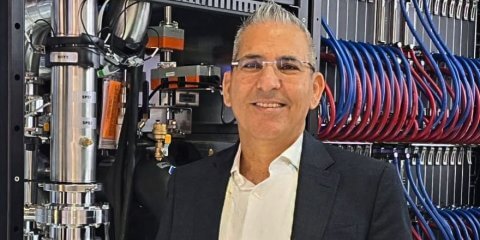
Amer Khreino, Founder and Director of Conceptlogic Ltd., explains how his “7 Elements” framework and MAAP platform are helping distributors escape margin pressure, harness AI and IoT with discipline, and evolve from transactional middlemen into capability-driven, value-led partners.
Distribution has long been the quiet engine of global commerce, moving products, financing inventory, and connecting vendors to markets. The model that powered decades of growth is now under strain. Margin compression, commoditisation, accelerating technology cycles, and rising customer expectations have exposed the limits of traditional distribution thinking. The question is no longer whether distributors need to evolve, but how quickly and how deliberately they can do so.
Amer Khreino, Founder and Director of Conceptlogic Ltd., has spent years studying this shift across industries ranging from IT and cybersecurity to pharmaceuticals, electronics, and industrial materials. Khreino’s “7 Elements of Value-Added Distributors” framework offers a structured, field-tested approach for distributors to move up the value chain, while the companion MAAP platform translates that thinking into measurable, data-driven transformation.
Khreino shares why financing and product movement are no longer enough, how technologies such as AI, IoT, and cloud can create genuine value when integrated with discipline, and what mindset shifts leaders must embrace to remain competitive in an increasingly global, digital, and complex distribution landscape.
Interview Excerpts
How does your “7 Elements” framework help distributors move beyond margin pressure and commoditisation to achieve sustainable profitability?
Distributors have traditionally relied on financial strength and logistical efficiency to bring vendor products to market, but this model is no longer sufficient. Supply chain complexity, rapid innovation, evolving financing solutions, and more sophisticated product portfolios have reshaped the landscape.
The “7 Elements” framework takes a 360-degree view of how modern distributors can evolve into true value-added partners. Margin erosion typically occurs when differentiation declines, so the framework helps distributors systematically move up the value chain. It guides them in optimising financial structures, enhancing logistics capabilities, and implementing the right tools and processes for consistent execution.
It also shows how strategic vendor and product portfolio selection can expand reach while improving margins, and how economies of scale can sustainably lift profitability. At the core are value-added services, which unlock new revenue streams, strengthen partner support, and shift distributors from margin compression to value-driven growth.
What were the biggest gaps you observed in traditional distribution models that led you to develop this structured, field-tested approach?
Traditional distribution models have struggled to keep pace with the rapid evolution of modern markets. Value-added distribution remains one of the most effective go-to-market models across IT, cybersecurity, electronics, pharmaceuticals, industrial materials, and power tools, yet many legacy approaches stay anchored in a narrow view of success.
Historically, distribution has been driven by financing and product movement. These are still essential, but they are no longer enough. Capabilities such as digital marketplaces, advanced funding solutions, and partner-enablement services are often underdeveloped or missing altogether. What I consistently observed was a structural gap between how distributors operate and what the modern ecosystem demands.
The “7 Elements” framework closes that gap by embedding today’s technological and business innovations into a cohesive operating model. It shows how distributors can lead through supply chain finance and Device-as-a-Service models, robotics-enabled logistics with RFID and IoT, AI-driven customer experience and governance, cloud marketplaces, and advanced demo and solution centres. In essence, it shifts distribution from a transactional model to a capability-driven, innovation-led platform.
How does the MAAP platform translate your framework into a measurable, data-driven transformation for distributors?
The MAAP platform is our 360-degree Health Check, Maturity Assessment, and Audit Platform, purpose-built for distribution businesses across major industries. It is calibrated for IT broadline, cybersecurity, and AI value distribution, industrial distribution, pharmaceuticals, and FMCG.
While the core model is anchored in the “7 Elements” framework, the platform incorporates industry-specific dynamics such as margin structures, operating models, and competitive benchmarks directly into its assessment logic.
“MAAP goes beyond a traditional diagnostic tool as it evaluates current maturity across all critical capabilities, identifies performance gaps against best-in-class benchmarks, and quantifies the impact on margin, revenue growth, and operational efficiency.”
Most importantly, it translates these insights into prioritised, actionable recommendations, helping leadership teams align strategy, operations, and investment decisions with measurable outcomes.
In what ways can distributors effectively capitalise on emerging technologies like AI, IoT, and cloud to create real value rather than added complexity?
AI, IoT, and cloud are powerful, but only when applied with clear business intent. The real challenge for distributors is not adoption, but disciplined integration. Distribution remains a fundamentals-driven business. Growth still depends on how effectively you manage operations, serve customers, and scale value, and these technologies are enablers that strengthen execution rather than replace the basics.
Robotics and IoT are transforming warehouse management and inbound and outbound operations through improved speed, accuracy, and cost efficiency. AI is elevating CRM and ERP systems with faster response times, sharper customer insights, and stronger risk management. Cloud platforms are powering digital marketplaces that streamline engagement between vendors, partners, and customers, from product discovery and service delivery to payments, tracking, and renewals.
The key is to adopt these technologies with a clear link to measurable outcomes, whether improving margin, enhancing customer experience, or increasing operational efficiency. Without that alignment, technology adds complexity rather than value.
With distribution becoming increasingly global and complex, what strategic mindset shifts are essential for leaders to remain competitive in the digital era?
Distribution leaders must shift from managing operations to continuously building differentiated capabilities. That begins with a mindset focused on creating sustained customer value by adopting technologies that reduce cost, improve efficiency, and elevate experience, while staying agile enough to adapt business models as markets evolve.
What distinguishes the “7 Elements of Value-Added Distributors” framework is that it offers both structure and flexibility. It defines all the critical success elements required in modern distribution, while allowing each element to be weighted differently based on industry dynamics and strategic priorities.
Inventory efficiency is a good example. Days Inventory Outstanding might average around 25 days for an IT broadline distributor, but 90 days is typical in industrial distribution. A cybersecurity value distributor may place greater emphasis on channel enablement, whereas an IT broadliner may prioritise configuration and staging services. This adaptability ensures leaders are not applying a one-size-fits-all model, but a dynamic framework that evolves with their business and keeps them competitive, relevant, and resilient in the digital era.