



 World Telecommunication and Information Society Day (WTISD) is observed every year on 17 May, the day highlights how resilient networks, cloud platforms, data centres, and digital ecosystems are shaping inclusive, secure, and AI-ready economies.
World Telecommunication and Information Society Day has become more relevant than ever in an era shaped by artificial intelligence, cloud computing, cybersecurity, and digital-first economies.
What began as a commemoration of global telecommunications history is now a timely reminder that connectivity is no longer a background utility. Modern economies, public services, and enterprises increasingly depend on it.
From fibre networks and 5G infrastructure to satellites, data centres, and digital payment ecosystems, telecommunications now sits at the centre of economic resilience. The Middle East carries added significance here, with governments accelerating investments in AI, digital government and sovereign cloud. The region’s AI economy can only scale if its digital networks are resilient, secure, intelligent and inclusive.
Led by the International Telecommunication Union, the day marks the anniversary of the signing of the first International Telegraph Convention in 1865.
The 2026 theme, “Digital lifelines – Strengthening resilience in a connected world,” reflects the growing need for robust digital infrastructure that supports essential services, public safety and economic continuity.
The rise of AI makes this infrastructure even more critical. AI systems require high-speed data movement, scalable cloud access, low-latency networks, resilient data centres and strong cybersecurity controls. Telecom operators, cloud providers and cybersecurity vendors are becoming the invisible architecture behind enterprise AI adoption.
Recent UAE developments illustrate this transition clearly. In April 2026, e& UAE, in partnership with Huawei, completed the Middle East’s first Proof of Concept for flexible dynamic network slicing. The initiative strengthens 5G-Advanced capabilities by enabling intelligent, real-time adjustment of network resources, demonstrating 100 per cent SLA compliance across critical parameters such as low latency and guaranteed throughput.
On the consumer side, e& UAE introduced Fibre+ in May 2026, delivering multi-gigabit speeds, Wi-Fi 7 routers and Fibre-to-the-Room capabilities. The launch reflects how digital households are now part of the broader connected economy, supporting remote work, online learning, gaming and smart home services.
du recently announced a next-generation industrial AI platform supported by its National Hypercloud. Designed to help industrial enterprises adopt AI within a secure, sovereign environment, the platform includes pre-built models for manufacturing efficiency, asset management and energy optimisation, along with no-code AI modelling capabilities.
du Tech’s collaboration with Bosch Software Digital Solutions highlights the importance of ecosystem-led transformation. AI adoption at scale requires telecom infrastructure, cloud platforms, industrial expertise, systems integration and cybersecurity working together.
Financial inclusion is also being reshaped. du Pay has processed more than AED 2 billion in transactions since launch and recorded over 1.4 million downloads, supporting the UAE’s move towards a cashless economy.
Meaningful connectivity, however, means more than being online. Access must extend to education, healthcare, financial services, government platforms and digital skills. The benefits of connectivity must reach households, SMEs, students and underserved communities, not just large enterprises.
The 2026 theme also brings cybersecurity into sharper focus. With economies becoming more connected, networks, cloud platforms, data centres and industrial environments must be protected against cyberattacks, outages and supply chain vulnerabilities. Resilience must be designed into the system from the beginning.
The message for the Middle East is clear. The next phase of AI-led growth will require intelligent telecom networks, sovereign cloud platforms, scalable data centres and a strong channel ecosystem capable of delivering transformation at scale.
Connectivity is no longer simply enabling the digital economy. Connectivity is becoming the economy’s most critical lifeline. With this vision in mind, industry experts across the Middle East share how connectivity, AI and resilience are reshaping their strategies, partnerships and priorities. The views gathered to mark World Telecommunication and Information Society Day 2026 offer a clear window into where the region is headed next.

Elie Abouatme, EMEA Head of Telecom, Media & Entertainment, Industry GTM, ServiceNow
Connectivity has become a utility people expect to work, like electricity, and the moments it doesn’t, are the moments that define public trust. Across the operators I work with, from Casablanca to Riyadh to Johannesburg, the pattern is the same: network engineering has done its job; the next decade of value sits in the operations layer above it. When planning an AI strategy, organisations must stop treating resilience as a network engineering problem. Resilience now spans sovereign data control, AI governance, autonomous operations, and the speed at which we can restore service end-to-end. The customer and the network can no longer be treated separately. The UAE is already setting that bar with one of the most ambitious sovereign AI agendas in the region, with operators like e& moving from connectivity into platforms, and with a government that treats digital services as critical national infrastructure.
“The networks are built and now we have to keep them worth depending on, especially as customer expectations continue to rise.”

Alan Qi, President of Huawei Cloud Middle East & Central Asia
In today’s digital economy, business continuity is no longer just a technical requirement; it is a strategic necessity that every enterprise must guarantee. Huawei Cloud is fortifying the UAE’s digital resilience through a geo-distributed multi-region architecture spanning our strategic hubs across the regions. Each regional hub can serve as primary, secondary, failover, or edge distribution depending on business requirements, providing a high-reliability foundation to ensure that critical operations remain uninterrupted even during unforeseen disruptions.
“This robust infrastructure allows enterprises to scale with complete confidence, knowing their services are backed by the region’s resilient digital fail-safe as the UAE’s economy accelerates.”
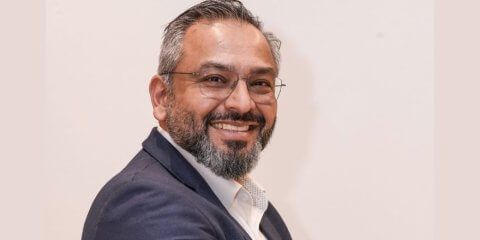
Salman Kazmi, Area Vice President, META, BMC Helix
World Telecommunication and Information Society Day reminds us that the concept of connectivity in the current day and age has evolved beyond mere network connections into something bigger and better — a catalyst for innovation, inclusion, resilience, and opportunity. With fast-evolving AI-based business operations, organisations must strive for secure and reliable experiences that are human-centric and digitally led.
“We believe that future leaders are those who combine automation, intelligence, and operational resilience to deliver better experiences and sustainable digital growth for businesses and communities alike.”

Emad Haffar, Head of Security Consultants for META, Kaspersky
Organisations should view cyber resilience as a continuous process of adaptation because both technologies and adversaries evolve constantly. Strong cyber resilience ultimately supports broader digital trust, which is essential for sustainable smart cities, digital government initiatives, and connected economies. We believe that cybersecurity and secure-by-design principles are critical not only to protect the digital economy, but also to elevate cyber resilience that guarantees business continuity, trust in service delivery, and operational stability. We believe resilience is a shared responsibility that requires collaboration across governments, industry, and users.
“By prioritising trust, awareness, and secure-by-design principles, we can build a safer, more inclusive and resilient digital society for all.”

Yousef Salamin, Head of Infrastructure Solution Sales, UAE, NTT DATA
Technology must serve a greater purpose, connecting people, empowering businesses, and driving sustainable progress. The industry has a shared responsibility to build digital ecosystems that are secure, resilient, and inclusive. The future belongs to organisations that embrace collaboration, invest in innovation, and prioritise trust.
“With AI, cloud, and cybersecurity continuing to converge, our focus should be on creating technology platforms that deliver real business outcomes while contributing to national digital ambitions and societal advancement.”

Bassel Khachfeh, Digital Solutions Manager, Omnix International
Connectivity is no longer only about networks; it is about enabling opportunity, inclusion, resilience, and trust. With AI, cloud, smart infrastructure, and digital services continuing to grow, Agentic AI will play an important role in helping organisations move from automation to intelligent, autonomous action. On World Telecommunication and Information Society Day 2026, OMNIX’s commitment is to build secure, reliable, accessible, and human-centered digital ecosystems that improve lives, support businesses, empower communities, and contribute to the UAE’s vision for a connected, inclusive, and future-ready digital economy.

Mikko Lavanti, President, Nokia Middle East and Africa
The industry is entering a defining phase where AI is accelerating the scale and complexity of digital infrastructure faster than ever before. This creates significant opportunities, but also greater responsibility. The focus must remain on building networks that are trusted, resilient, secure, and sustainable. Collaboration across the ecosystem will be essential to ensuring innovation continues to deliver long-term societal and economic value. At Nokia, we believe the combination of advanced connectivity, AI-native architectures, automation, and cloud technologies will shape the next generation of digital transformation and enable more intelligent, inclusive, and future-ready societies.