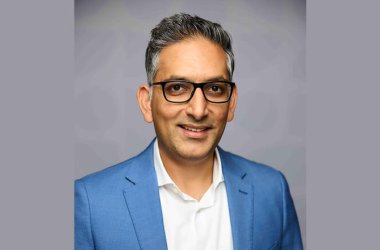



CNME Editor Mark Forker sat down with Shailesh Shukla, Chairman and CEO, of Aryaka, to learn more about his vision for the company, how they differentiate themselves from other players in the market – and the impact their Unified SASE as-a-service product will yield for the businesses that adopt the technology.
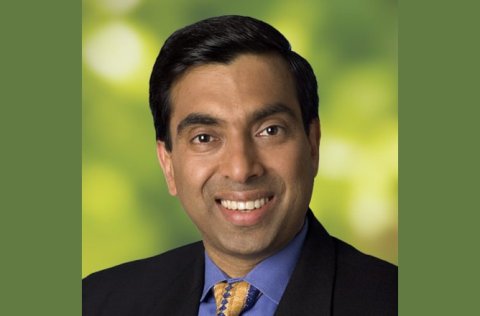
Shailesh Shukla is a veteran of the IT industry and has enjoyed quite a remarkable journey to date.
Shukla was the General Manager and Vice-President of Google Cloud until 2022 – and played a key role in both building and scaling their billion-dollar cloud networking business.
Prior to that he held senior leadership positions at Cisco and Juniper Networks.
Shukla moved out to Silicon Valley in 2003 and hasn’t looked back ever since.
It’s almost seen as a rite of passage when you live and work in The Valley to embrace the startup ecosystem, and Shukla did just that.
However, now he is dancing to the beat of his own drum as the Chairman and CEO of Aryaka.
Aryaka has been described by some analysts as a pioneer in cloud networking and security and has now pivoted successfully into the AI space.
In a candid conversation with CNME, Shukla kickstarted proceedings by providing a broader overview on the current state of play in the market.
“I think across the broader industry it has become evidently clear that hybrid compute is here to stay. What has also become very clear is the fact that the global workforce is hybrid, and that’s not going to change. However, we know that hybrid workers can be anywhere in the world, but they access and they need that access to be both reliable and secure, and that many businesses have struggled with delivering that for their employees working remotely,” said Shukla.
According to Shukla, the environment of complexity has increased ten-fold due to the added layer of AI, particularly from a security perspective.
“We live in a new world, and it is a world where AI sits front and centre. It’s complex. Your LLM may be residing in Silicon Valley, but some of your users may be operating from Brazil, India or Europe, so basically users are everywhere and your data assets are all over the place. Essentially, what this creates is complexity because the variability in performance and reliability is going to be hugely challenging from a security perspective. The reality is that if AI is useful to us in terms of improving the security of your assets, then it is equally the case that bad actors are going to use the same tools to utilise and launch sophisticated cyberattacks,” said Shukla.
Shukla said that when you consider all the factors above, it was obvious that the market needed something different.
“There was a need in the marketplace for a company, or a kind of architecture that simplifies everything at a global level, and something that has security layered on top, and contains the ability to distinguish between different types of traffic to apply certain policies. These factors led to the inception of Aryaka, and ultimately, we were a pioneer in abstracting away the global network and making it available as-a-service,” said Shukla.
Shukla added that at the time of the company’s foundation nobody in the industry was talking about network-as-a-service.
“What we did was build our own global network infrastructure, built our own networks of points of presence, which meant that when you entered the Aryaka network it was like entering a local area network, and that allowed us as I already mentioned to create infrastructure that could abstract away the complexity of the global network. Then as we know, the world evolved and there was a clear shift towards SD-WAN, and again, we were able to deliver this as-a-service,” said Shukla.
Shukla then explained the factors that led to the creation of Aryaka 3.0.
“In 2018, there was an evident shift towards a convergence between network and security. If you have users all over the world then it’s practical for you to want to secure everything at the same time, as opposed to moving everything to the point of presence. That’s why we launched Aryaka 3.0 as part of our unified SASE as-a-service offering. SASE is an industry-term, which stands for secure access services edge, and it merges networking and security together, and we make that available to enterprises to consume, and it is totally unique in the industry,” said Shukla.
Shukla expanded on what makes Aryaka 3.0 so unique compared to other players in what is an ultra-competitive marketplace.
“We are unique because of what exactly it is that we offer, which is unification. SASE-as-service, each word is important. It’s unified, it is truly unified because it is on this converged OnePASS architecture, you take in the traffic and open it up and apply all the policies for network optimisation, reliability and security. You define one policy and implement it and our OnePASS architecture makes it all very simple for enterprises. It is an important differentiator for us, because we can go to an enterprise and say we can offer you a truly unified SASE as-a-service, with all the components you require. That is powerful because most enterprises quite naturally want to focus on their own core business, and they don’t want to worry about global networking security, they want to pay someone else to do that for them, and that’s where Aryaka comes to play,” said Shukla.
Aryaka was founded in 2009, so they are not a new market entrant, but it’s fair to say the company’s growth trajectory has gone in the right direction since Shukla joined the company, initially as Chairman in 2023, but especially since assuming responsibilities as the CEO of the company.
He was keen to highlight their rich tradition and culture of innovation, which Shukla says is in the DNA of Aryaka.
“I think that the philosophy of the company from its inception, and certainly from what I inherited it’s quite clear there is a culture to build things, we are the innovators of this industry. We have industry domain experience, and we understand the direction the market is headed, and how customers are evolving. You need to understand where the pain points are,” said Shukla.
Shukla provided an example of some of the pain points where customers had come to Aryaka seeking help and a resolution.
“When I first joined Aryaka, the adoption and democratisation of AI was starting to gather traction, and a lot of CIOs and CISOs were coming to us and saying a lot of our employees are using different Gen AI tools, but I don’t know who is using what, and this created this concept of what we called Shadow AI. They were asking for help, but one had a trail of thought that said I want to harness the efficiency and productivity of AI, so let’s adopt all different forms of AI to increase that productivity, whereas the other trail of thought was saying hold on, this is great, but it’s creating all this data leakage, we are leaving the back door open, and all the proprietary data is being leaked, so let’s stop all AI usage, but you can’t live between those two extremes,” said Shukla.
So, what was the solution that Aryaka provided?
“We quickly recognised that we carry all the traffic, so that gives us great visibility to understand what is happening on the network. I can tell our customers who is using what and when. We developed the capabilities to tackle that challenge of Shadow AI with a three-step approach. The first was based on giving users the visibility through our observability capability. Secondly, we gave them control where they can find that middle ground between wanting to deploy AI to enhance efficiency, but also do it in a way where they are not leaking data and leaving themselves exposed or vulnerable to an attack. Finally, to increase the efficacy of the LLM model you need to infuse it with company proprietary information, and that is called RAG (Retrieval-Augmented Generation). However, the moment you have the AI model to consume your company’s proprietary information then the response can lead to leakage of sensitive information. What our customers wanted was to be given the ability to find if any of their data was being leaked. We can give them visibility and control and help them prevent, and that’s a powerful example of how we can help customers overcome their business pain points,” said Shukla.
The word of 2025 was agentic.
Over the last 12 months, most of the discussion in the enterprise world has been on the role of agentic AI.
There are many in the world of cybersecurity that see it as the perfect remedy for alert fatigue in a sector that has a major skills shortage.
However, that has been countered by the stark reality that AI agents can be a huge security risk if the proper guardrails are not put in place.
Shukla stressed the importance controlling the ‘access’ given to agents and fostering a safe environment where enterprises can capitalise on the benefits of AI agents without compromising on the security of their business.
Shukla was adamant that agentic AI is here to stay.
“Look the fact of the matter is if you want humans to be more productive and efficient then you’re going to have to require AI agents to do a lot of work and do a lot of the heavy lifting manual work that previously bogged workers down. Agentic AI is going nowhere, and in fact, it’s only going to get bigger as we move forward. It is crucial that there is some level of access control when it comes to the deployment of agentic AI, and an acute understanding of the risks that are associated with that. Our approach to the question of agentic AI is to adopt a Zero Trust approach. Trust no one and only allow the traffic on your infrastructure and on your network that is well understood, whether it’s human, or agentic. You need to link the client and network side together and have them interlinked, so you have end-to-end zero trust, and that’s our approach and philosophy,” said Shukla.
Shukla concluded a wonderful exchange, by stressing how the company has an unwavering commitment to simplify things for their customers, and that approach is resonating with the marketplace.
“We believe in simplicity, and we are passionate about simplifying challenges for our customers. We don’t want to bamboozle them and confuse them when they deploy our technology. We want to simplify the entire process and experience for them. We are seeing incredible traction in the market right now because of our story and our products, and we are growing massively right across the Middle East, because that notion of simplicity,” said Shukla.